Can I ask how you feel about Disney hiring Wernher von Braun? Do you think his apolitical personal nature makes his hiring apolitical in spite of his history as a Nazi scientist, or is his history of work unremovable from his person and reflect badly on Disney for putting a former Nazi front and center? (My dad thinks the former, while I’m inclined to think the latter.)

I didn’t even know Disney had hired Wernher von Braun, though i knew NASA did (I found an article about both). Tom Lehrer even wrote a song about it. You should listen to it, it’s funny.

No, I don’t think hiring von Braun was apolitical, either for Disney or for the U.S. government. But Disney was an antisemitic fascist-sympathizing fuck to begin with, so it’s not exactly surprising.

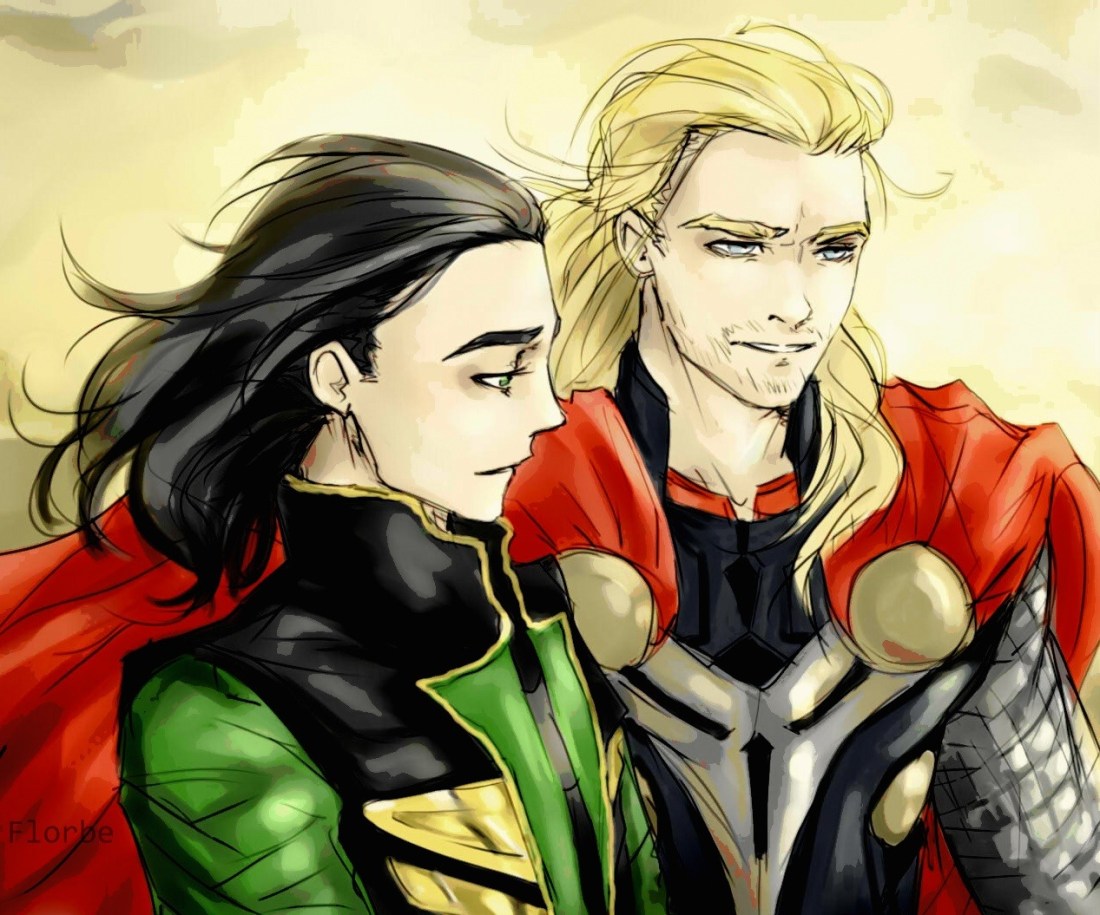
the-sun-shining-on-thorki:

Loki knew he was adopted since childhood, and that the throne wasn’t his.

On his 700th name day, Frigga entered his study and sat next to him. Holding his hands in hers, the Queen stated,

“You shall live in the shadows, in the shade of Thor’s greatness. However, he can only survive if you will it so.”

With Frigga’s guidance, Loki inherited Asgard’s spy network when he was 1000.

On the surface, the King’s brother is looked down upon as unimportant by many courtiers. He flirts and jokes in court, tells tales of his travels and converses with diplomats. He cannot lead the country like his brother, is not given military power and has little influence. Some call him a parasite in secret, mocking him for his reliance on royal favours.

In reality, Loki is second in power in the kingdom. He plants spies within and without the court, keeping track of any undercurrents of rebellion. Any assassination plots are crushed before the news can reach the court, to prevent giving the impression of an unstable rule. Loki also subtly spreads rumours in the nine realms that ultimately place Asgard at a favourable position in treaties and their negotiations.

His hands are stained with the blood of Thor’s enemies, a place to pay so as to uphold the King’s image as the benevolent ruler. 

No one knows but Thor. No one shall appreciate his fidelity but Thor.

Every evening, the King’s brother visits his chamber for a game of chess. Unknown to most, the game involves the King pounding viciously into the Spymaster. Loki holds his brother captive in his arms, whispering into his ears the latest rumours and intelligence he has gathered. In return, Thor gives him brief instructions and desired outcomes, placing his absolute faith in Loki’s ability to carry them out. It is only in his chamber where Thor reveals his true ruthlessness as the monarch striving to maintain his power, and Loki bears witness to the absolute passion of his love. 

Loki is Thor’s equal in bed, and the King allows no other to enter his heart.

To most, the King continues to shower his undeserving brother with royal favours and indulge his misgivings.

“The King is a fool”, his courtiers say.

Thor, however, is no fool and knows his brother deserve all the love he can give, and he shall make sure Loki is reminded of this every day.

ms-cellanies:

lucianalight:

philosopherking1887:

Unpopular/extremely weird opinion: Ultron was a more sympathetic villain than Thanos (and no one was even trying to make Ultron sympathetic).

Ultron’s motives are understandable and he is sympathetic. While Thanos is just a stupid disgusting abuser.

With you @philosopherking1887.  The discussion between Ultron and Vision at the end of the film – they basically agreed on the same premise but Ultron was the pessimist/glass half empty & Vision was the optimist/glass half full.  Ultimately, the difference between a screenwriter with a vision/purpose/coherent message & ones who didn’t.

@living-in-an-alternate-universe , @loxxxlay​, @maneth985@juliabohemian​: I explained my reasoning in a post I made shortly after Infinity War came out; it’s here. Someone found it and liked it yesterday, which is why I was reminded of how much more interesting Ultron is.

@ms-cellanies, I’m not sure it’s a matter of pessimism vs. optimism, exactly… well, you can read my long post for my thoughts on the crucial difference between Ultron and Vision. But you are entirely correct on the difference between the screenwriters – and it’s also, I think, the difference between a screenwriter with a philosophical education and ones who maybe read the Wikipedia article on Ayn Rand once. It’s just as unfortunate that they ended up writing Vision in his subsequent screen appearances (Civil War and Infinity War) as that they tried to write a pseudo-philosophical rationale for Thanos. Joss Whedon knows how to write slightly inhuman, uncanny, but recognizable thought processes; Markus & McFeely just gave us “I am a robot meep-meep-moop.”