I read a pro-Ragnarok meta (in particular, it’s pro-Thor and Loki’s “reconciliation”). I don’t want to annoy the person, but I want to talk through some of the things it made me think about, so here’s some word vomit under the cut.
Thiiiiiis. I read that same meta, and you’ve laid out exactly why that interpretation will never work for me. That was maybe a reconciliation for a completely different Thor and Loki, though I personally don’t find it a very compelling one. But it definitely makes no sense for the characters we knew before.
Also I want to pull this out, the idea that it is being interpreted that way due to a belief
that Loki’s betrayal of Thor is a pattern intrinsic to Loki’s personality, and not a deviation from a thousand year norm of loyalty stemming from Loki’s various traumas
because that is a fuckin good observation.
It is at the very least a lot more complicated than “loki betrays, as a matter of course, because ¯_(ツ)_/¯” and it is in fact not in the nature of trickster figures in general or Loki in particular to betray their (very few) loved ones reflexively, for no reason, just for shits and giggles. Even at his most flippant and devil-may-care (e.g., some of the early comics), he has comprehensible (if uncomfortable) motivations: he may turn cars into ice cream because it’s amusing, but he wouldn’t be coming up with hilarious ways to be a shit-stirrer in that context if it weren’t for his resentments, his jealousies, his broken relationship with his brother. And you don’t fix that by having Thor throw up his hands and say “well, you do you, catch ya on the flipside”
I think there’s a level of mischief Loki’s always going to possess. Turning cars into ice cream is something I can see Loki doing for a laugh before their falling out/after their reconciliation, though you’re correct that in that context in the comics he’s being a shit-stirrer due to resentment and jealousy. I find myself more frustrated when people attribute Loki dropping Thor out of the sky in Avengers or backhanding Thor in Thor or, if Ragnarok’s to be taken seriously, attempting to kill Thor many times throughout their childhood (Valkyrie: He did try to kill me. Thor:
Yes, me too. On many, many
occasions. There was one time when
we were children…) to “lol mischief!” That’s not mischief. That’s trying to kill someone that you love. Less extreme, more common, and still very annoying to me, is attributing Loki not telling Thor he survived in TDW or his plot in the beginning of Thor to Loki’s mischievous nature (though I think there’s an element of it in Thor because Loki’s chaotic, but it’s not even close to the main purpose–I don’t believe that Loki commits treason, gets a person killed, and does something that he knows will hurt Thor solely for shits and giggles, mainly because the movie makes it pretty explicit that wasn’t really the point).
Oh goodness, anon! You didn’t make this easy! I love it!
I’m not sure how much character growth exists in each individual scene I’ve come up with, but these are my favorite scenes that are part of their overall growth, imo. I can’t really order them, so I’ll just over-explain my thoughts about scenes from each movie.
Thor
The “Give Us a Kiss” Scene
The scene that sets up their brotherhood. And it was deleted. Fucking… Anyway, this scene shows their pre-Thor dynamic well. Loki loves his brother. Thor clearly loves him, too, but there’s so many issues with communication. And I really like that it’s made clear Thor enjoys Loki’s magic, even though he belittles it (in an effort to big up himself, I might add, whilst he’s feeling uncertain about his impending coronation). And, of course, my Thorki heart can’t help but scream when Thor doesn’t just drag Loki into a kiss right then and there. I love how a lot of post-IW time travel fics take Thor back to that moment and have him snog Loki senseless. More of that, please!
The Table Flip Scene
The extended version! They sit closer together. It’s made much more clear how surprised Loki is that Thor talks about shared glory, not just glory for himself. The way Loki plays Thor like a fiddle, but also seems to be genuine in a lot of ways (like the line about how Thor’s day will come–he really just wants to improve Thor and prove to everyone how great his own abilities are, not destroy Thor). Loki looking so fucking happy standing up next to Thor and the way they walk off together. They were so young! They had no idea!
Thor’s Apology Scene
I’ve talked at length about this apology. I love it. I love that Thor’s tries to initiate communication the only way he knows how. He wants to fix whatever’s gone wrong between them. But, of course, it’s not about him. So it doesn’t do anything. No communication occurs. It’s endlessly frustrating and perfect for that reason. Also, it’s great to have Thor in this position where he must talk down the “enemy”.
The Bifrost Fight Scene
*cries* Thor doesn’t even know what’s going on! But he doesn’t want to hurt Loki! asdfghjkl;’
Avengers
The Cliffside Reunion Scene
I feed off the miscommunication in this scene, both purposeful and accidental. Thor misunderstanding Loki’s perspective and anger. Loki’s accusations. Thor dismissing both, even though one is legit. Just… how it shows that they’re both such a mess. That they’re coming from different places. Also the neck grab. The conflict within Loki. The way he leans away, but doesn’t actually try to escape Thor’s hold (at first–he does shrug him off when he actually wants to). And Loki being a little shit at different points. The way the humor and emotion blends. Perfect way to summarize what’s up with their relationship and their characters (for those who haven’t seen Thor). Loki isn’t usually like this (Thor believes someone must be controlling Loki). They’re both terrible communicators. They love each other so much. They’re both deeply hurt and their wounds are fresh.
The Stark Tower Fight Scene
Thor reaching out. Loki hearing him. Loki wanting to accept. Loki knowing he can’t. Because it’s too late. The moment Thor decides he can’t get through to Loki. He comes so close, and yet… Plus, there’s yet another big hint that Loki doesn’t want to be doing this…
Thor: The Dark World
Thor and Loki’s Escape Scene
I will never not enjoy the way Loki’s a little, excited shit the entire time they’re committing treason. The shapeshifting. The spicy neck grab. The backseat driving. “Well Done. You’ve Just Decapitated Your Grandfather.” Loki being impressed with Thor outsmarting him. The way he lights up when he’s driving them through the pathway between realms. You can tell Loki’s slipped back into old behaviors, waiting for Thor to start behaving the way he used to when they went on unsanctioned adventures. Thor, on the other hand, is trying to remain detached/serious/focused. Though there are moments where he can’t help but treat Loki like an obnoxious little brother. Great balance.
The Brothers on the Boat Scene
Loki’s concern being for Thor’s happiness. The way their grief gets the better of both of them and they lash out. The way Loki effortlessly offers comfort. The way Thor looks when he realizes it’s worked, that it did comfort him. That there’s some part of Loki that’s still Loki, not just a selfish, cruel madman. The way Loki looks at Thor! There’s no scene that does better with their post-Thor/post-Avengers dynamic, imo. They both have a voice. No one’s condemning Thor for being upset, but it’s also crystal clear who Loki really is. Their communication problems are also a big part of the scene. Ugh! It’s amazing!
The Confrontation with Malekith and Loki’s “Death”
Thor trusting Loki not only to carry out the plan, but to protect Jane. The way Thor protects Loki. The way he holds him and cries while Loki “dies”. This scene makes me cry. It’s so wonderful. It shows how deeply Thor cares about and trusts Loki, even when he’s angry with him and trying to distance himself. Thor’s loving and protective and conflicted. And heartbroken. I know lots of people get upset about Thor leaving Loki’s body, but I don’t hold that against him. He just committed treason. He can’t take Loki’s body to Asgard. Anyway, this scene is a pretty clear example of character growth. It’s meant to be the moment Thor realizes he gave up on Loki too quickly. And it’s a moment of redemption for Loki (this isn’t negated by the fact he survived–Loki’s illusions are canonically unable to be touched without disruption).
Thor Returns to Face “Odin’s” Judgement
So, I think this scene often gets written off as Loki being evil because of the line at the end, but I don’t see it that way. He offers Thor the throne. He offers Thor the freedom Odin refused to grant him. He lets Thor leave with supportive words from Odin. That’s… all out of a deep love for Thor. Yeah, he benefits from some of it, but what’s he getting out of making Odin look like a good, supportive father? That’s just Loki telling Thor he’s proud of him. And he should be. Thor’s line in that scene really shows how he’s grown through the movies. No longer the child proclaiming himself king. Able to admit that others possess skills he does not. It’s great. I wish this scene were addressed more in fics. I think there’s so much to play with here, and always love seeing people tackle it.
you basically have to write off the ninety nine point something percent of all humans who ever lived that did not grow up with your very specific set of values
that seems limiting
I keep seeing posts to the effect of “being a product of their time is no excuse” and I’m just like – that’s awfully easy to say from the other side of things. Awfully rich to assume that the values of 2017 progressives are the be-all end-all. Who knows what new prejudices our grandchildren will notice that we’re totally blind to? You can’t stand on the shore and yell at a fish for being immersed in the water.
I think it’s a really interesting exercise (but not a Rule for whether someone is Acceptable, because that’s not productive) to look at historical morality in context, not according to the prevailing attitudes of the times, but according to the range of attitudes. According to the moral principles genuinely under question and debate at the time! So, as a blatant example – I do judge people like George Washington and Thomas Jefferson for their ownership and terrible treatment of slaves, because abolition was an idea that existed in their time. Unpopular, but thinkable. And Jefferson at least was quite radical in other areas and fully capable of deviating from his predecessors and peers!Whereas I don’t judge Marcus Aurelius nearly as harshly, even though he too was a powerful leader of a slave-owning nation who tried to think seriously about moral principles and never considered freeing slaves, because the idea of slavery as a moral wrong had no traction or presence in the ancient world whatsoever.
Context is relevant, but that doesn’t make it simple.
I think TJ and GW are perfect examples because yes, they absolutely knew that slavery was wrong – Jefferson said it was a corrupting influence on the entire state of Virginia – and yet they constantly talked in circles around the idea of actually freeing their slaves or actually speaking out in favor of immediately-executed, total abolition because, like, that would be hard and unpopular among their social circles and dangerous to their political careers and who would bring them lemonade and raise their children for them? But also, I think, because abolishing slavery would mean acknowledging how truly evil it was, and thus acknowledging their own complicitness. They couldn’t give up the perks and they couldn’t accept the blame.
Which is to say, yes, context is important, but so is self-examination. If you can acknowledge that admirable individuals who performed heroic feats and/or wrote beautiful words could also willingly engage in and profit from oppression, you can come closer to examining your own role in oppressive systems. If you acknowledge human beings can not only do both good and evil things, but choose good or evil things, you can move away from “But I’m a good person!” or “But I meant well!” and look at what effect your actions have, as well as other people’s.
TL;DR: Admiring someone’s legacy while acknowledging their flaws is a step towards being able to improve your own behavior.
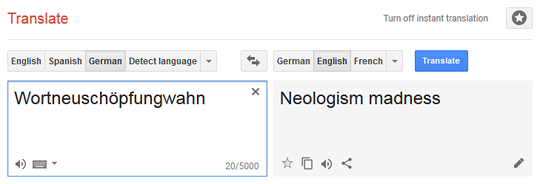
I’m half-convinced that many Germans regard it as a point of national pride to have words for every conceivable emotion, and every time anyone anywhere asks “is there a word for [obscure emotional state]?”, the entire nation of Germany collectively invents one, edits their dictionaries so that it’s retroactively always existed, and says “yes, yes there is”.


 Loki is the Philosopher King