“I studied art in Florence, that’s why I thought a lot about the meaning of this painting and I thought she’s the perfect woman. So, I talked to myself ‘Why not?’ Why can’t I be Botticelli’s Venus? I can be perfect even with all my imperfections. In the end, all women can represent this figure.”
Shhh, do you hear that? It’s every white supremacist screaming all at once.
And a glorious sound it is.
if you weren’t aware, vikings came across more civilizations than anyone in history. They regularly had contact with Muslim empires. They stole from other European cities to sell to them. There are even documents from Muslim merchants who wrote about the vikings. They wrote about how the vikings were huge and strange, and talked about viking funerals. A lot of what we know about Vikings is actually from Muslim writings.
Wow this guy is amazing uhhhhhh uhhhhhh such awesome work
-blogger at Afroculinaria.com
“Twitty is deeply engrossed in both the African American and Jewish food traditions. “Blacks and Jews are the only peoples I know who use food to talk about their past while they eat it,” says Twitty, 38.”
“From Richmond it was a short jaunt to Colonial Williamsburg, where Twitty spent the week lecturing, conducting training sessions and cooking in period costume at three of the living history museum’s venues. In all his talks, Twitty emphasized the impact of chefs and cooks of African descent on shaping American and Southern cuisines in colonial times and after.”
“At a conference he met the scholar Robert Farris Thompson, author of “Flash of the Spirit,” a book about the influence of African religions on African American art that helped him see that “soul food” was, among other things, a spiritual term describing a mystical connection between humans and the animals and plants they eat.”
“He cooked and he gardened. He studied heirloom seed varieties, some that had been brought from Africa and some that had been carried from the New World to Africa and then, on slave ships, back to North America, among them okra, black-eyed peas, kidney and lima beans, Scotch bonnet peppers, peanuts, millet, sorghum, watermelon, yams and sesame. He called those seeds “the repositories of our history” and wrote about them in a monograph published by Landreth Seed in its 2009 catalogue.”
“Twitty’s embrace of all the various parts of himself — African, African American, European, black, white, gay, Jewish — sometimes raises hackles, as does his habit of speaking his mind. An article he wrote in the Guardian on July 4, 2015, suggesting that American barbecue “is as African as it is Native American and European, though enslaved Africans have largely been erased” from its story, elicited scorn and worse: Many commenters were outraged by his idea of barbecue as cultural appropriation.”
This blog has become a record of my descent into stanning Loki all over again… Just a study of jotun Loki since he has a new costume to (loosely and barely) refer to,and a cute jotun skin in the app game
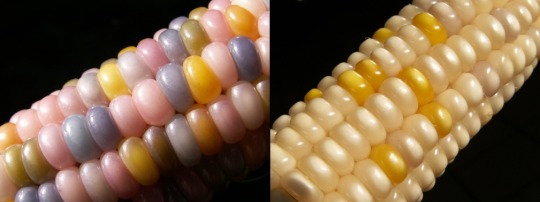
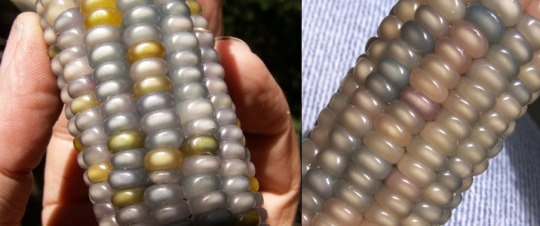
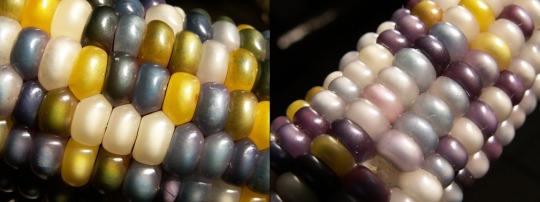
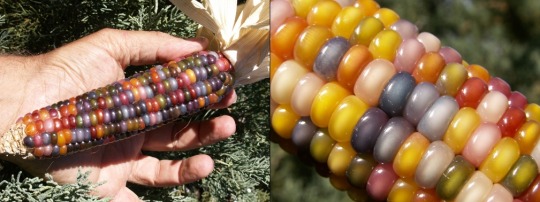
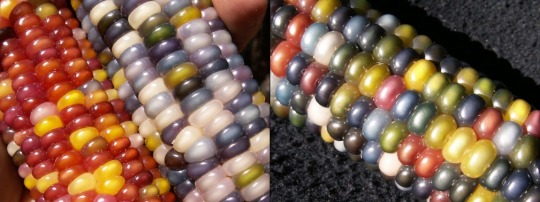
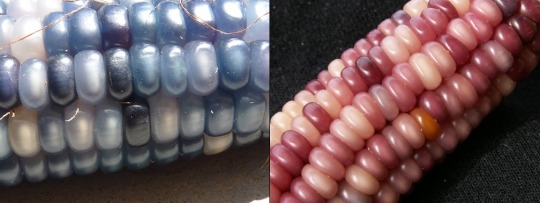
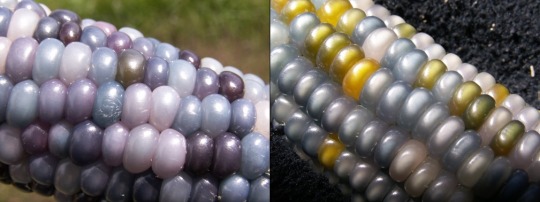
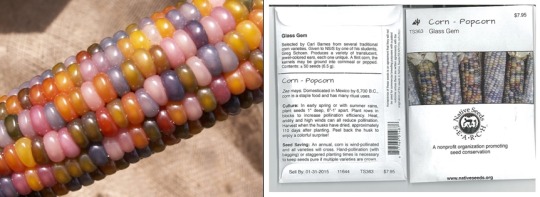
Glass Gem is a unique strain of
corn with kernels that look like
pieces of rainbow-colored glass. Source
Carl Barnes, an Oklahoma farmer, started growing older corn varieties to connect with his Cherokee heritage.
He isolated ancestral strains Native American tribes lost in the 1800s when they were relocated to Oklahoma.
Soon he began exchanging ancient corn seed with growers from all over the country, while simultaneously saving and replanting seeds from the most colorful cobs.
This eventually resulted in rainbow-colored corn.
When the rainbow corn mixed with the traditional varieties it created new strains, displaying more vibrant colors and patterns over time.
Glass Gem is a flint corn, so it isn’t really eaten off the cob. It’s usually ground into cornmeal and used in tortillas or grits, but it can also be used to make popcorn.





 Loki is the Philosopher King