they’ve both been though a lot actually–the difference is in the way they respond to it. loki is definitely the more emotional of the two and tends to wear his heart on his sleeve. when he is faced with something like his true parentage, his response is passionate and violent, bordering on unhinged. it’s so obvious, through his expressions and his actions, that the revelation absolutely crushed him. thor is such a positive personality that when life-shattering events happen he is still able to move forward with a smile on his face, even if he may be hurting inside, perfectly exemplified when thanos kills half his people, his brother, and his best friend and and hour later thor is taking on the full force of a star to forge a weapon that will kill the bastard. in that way, i think people tend to focus more on loki’s pain because he expresses it so freely and–dare i say–dramatically at times. i believe we don’t often get to see the depth of thor’s anguish because he hides it so well, because he know he has to be strong in order to fight and be a hero. say you had two children and both of them got hurt somehow. who would you go to first? the one who is crying and begging for help or the one who stands back and takes care of the injury himself? i mean, i can see where you’re coming from even if i don’t agree. just because the fandom seems to focus more on loki’s pain doesn’t lessen all that thor has been through, and i’m not trying to downplay either of their struggles. i just think it’s human tendency to look towards the person who screams the loudest.
I think the difference is that Thor is not mentally ill and has always had a solid support system. You know he’ll get through it and be alright, because he’s mentally healthy and there’s always been and always will be people on his side willing to listen and help. Loki doesn’t have that. Has never had that, in all likelihood. Even before his fall, the person closest to him, arguably his mother, was concerned primarily with defending Odin’s choices, his brother was too self absorbed to care about anybody overmuch (I’m not just putting down Thor, this was his characterization before his exile), his friends were really Thor’s friends and willing to betray him with zero actual evidence of wrong doing… and when he came back, having last been seen in the midst of a psychotic break that ended in attempted suicide, his brother literally greets him with violence, asks him just once who was controlling him, then drops the subject and as far as we can tell, no one bothers to again. Then he’s put in solitary for a year, his father and brother don’t visit at all, and his mother is again primarily concerned with defending Odin’s bad decisions. His family doesn’t bother to tell him themselves when his mother dies or allow him to attend her funeral. Thor, upon seeing his grief, refuses to even tell Loki how she died. And so it goes.
Yes, Thor has suffered many trials, and deserves sympathy for them, but he’s never been so alone in them as Loki has, under the weight of mental illness and with not one soul close to him willing to simply listen and be there without judgement or demand.
honestly, guys, thor and loki have been told all their lives that they are equals, but there’s no point in saying “you kids are equal” when all of your behaviour exhbits the contrary.
of course thor thinks loki’s “place” is beneath him. of course he assumes the worst of him – that’s what he’s learned to do, all his life, from odin. of course he doesn’t know how to communicate with his brother, or ask questions about his feelings – where would he learn that behaviour? who would teach him? of course he’s arrogant: he grew up knowing he would be king, and being told it was his right.
of course loki feels trapped on asgard. of course he wants to show up the hypocrisy that surrounds him. of course he wants to be seen, at the most basic level, as a person of equal value to his brother, who he’s been told all his life he is equal to, and who has been shown all his life he is not. of course he’s terrified to be revealed as a jotunn, when he is already plagued by a sense of inexplicable rejection. of course he’s scared, and of course he lies. how can you do anything but lie, when everybody around you does nothing but lie to you?
healthy, stable relationships with strong communication do not, in fact, just spring from the ether, ready-formed. if you have been taught your whole life to act a certain way, and have no conception of an alternative, it’s going to be impossible for you to break out of it until somebody else, outside that cycle, points it out to you – whether sb close to you, or whether you read like, an article or hear a radio snippet about building good relationships.
thor and loki exist with a big chasm between them, and they both want a bridge, but neither of them have the tools to build it. these things are not instinctive! they are hard!
Sorry for not answering this sooner, I had to think about it, haha. I really enjoy the concept of pre-Thor Loki because there is just so much we don’t know about who Loki was before everything went to shit. We have a basic idea of his general personality, of course – the envious younger brother, the mischief-maker, the less-favored prince. Even despite these attributes, though, Loki clearly holds Thor in high regard (”sometimes I’m envious, but never doubt I love you”) and never meant for things to go as far as they did.
When I think about pre-Thor Loki, the quote I always come back to is when Kenneth Branagh states (in his commentary on the Vault scene): “This is the moment where the thin steel rod that’s been holding your brain together snaps.” Truly, this moment is life-altering and devastating for Loki, but Branagh implies that Loki’s mind was fractured to begin with. We don’t generally think of healthy brains as being “held together with thin steel rods,” and it begs the question, why was Loki so unstable in the first place? Certainly as a result of his upbringing, as far as I can guess. (Whether or not mental illness is inherent in his brain chemistry is a different question, but it bears mentioning that mental illness includes conditions like anxiety, depression, etc, and that these conditions can be a result of one’s upbringing.)
I (like so many others) take such issue with Thor calling Loki’s grievances imagined slights because they are very much not imagined and, if anything, they are the worst kind of slights because by nature they are designed to break a person down steadily over time. If you tell a dog it’s bad enough times, the dog will eventually believe it. In the first twenty or thirty minutes of Thor, if we include deleted scenes, we see Loki being openly laughed at by a servant (!!), admitting he’s envious but telling Thor he loves him anyway, only to get a “Thank you” in response (without any reassurance of Thor’s feelings in return), a nasty comment from Volstagg on the rainbow bridge about Loki’s silver tongue, and Thor snapping for Loki to “know your place” when Loki tries to talk Thor down from literally starting an intergalactic incident.
Furthermore, after Thor’s banishment, Loki admits that he told the guard of their plans. It’s important to note that he’s not being sneaky or underhanded – he straight up admitted, “yeah, I told them we were going, and I’m not sorry because Thor is out of control and his idea was fucking stupid.” And what’s his payback? As soon as he leaves, the Warriors 4 talk about him behind his back, say he’s always been jealous of Thor, and wonder out loud if Loki is the traitor Laufey spoke of. Why would they immediately assume that Loki is a traitor to his family and his kingdom? Like, that escalated really fucking quickly.
All of these things show us that Loki is treated as less than, for no real reason other than he’s very different from Thor. Different, in Asgard, seems to mean, not as good as. The narrative tells us we should just accept this treatment of Loki because he turns out to be the villain (although the argument has been made, many times, that his actions weren’t villanous at this point – but, I digress) so one can assume that the same is true of Asgard – everyone should just accept that this is how Loki is treated, everyone is used to Loki being the punching bag, and no one should feel badly about it.
I don’t even think I’m answering your question right, I’m sorry, but what I’m trying to get at is, if this is the sort of treatment we see Loki getting just in the beginning of the movie, imagine a (very, very long) lifetime of the same sort of treatment. Imagine how broken down someone would have to be after that. Even if Loki’s upbringing wasn’t bad, in that he was privileged with wealth and title and family and all of that, it was definitely emotionally abusive. And I think that it’s very possible to feel like you have a nice life, to feel like other people have it worse than you, to feel like you deserve all of the imagined slights heaped upon you, until you snap. This is why Loki was hanging onto mental stability by a thread. This is why he suffers a complete mental breakdown – because, in addition to this toxic environment and mindset he’s been conditioned into, now he learns that he is something he’s been taught to believe is savage and disgusting and inferior. He loses all hope of ever being worthy, which makes him double down on his efforts to attain that worthiness. In his heart, maybe he knows it’s a lost cause, and maybe that’s why he fights so hard for it, anyway.
So, did he have safe havens? Probably. He probably holed up in the library with his books and scrolls, or maybe he had a favorite reading spot in the gardens, or maybe he liked to lay in the grass and watch the stars. Did he have secrets, things that were only his? Most definitely, as Loki in general (I think) is a private person who wants things to keep for his own, things that he doesn’t have to share with Thor. Did he hang out with Thor’s friends for obligation? No, I think that at first, he really wanted to be a part of their group. They’re all shown to be so close in age and class (except Volstagg, who seems older) that it seems like these are the people he should be friends with, and would be friends with, were he just more like Thor. I’m sure, eventually, he realized that they didn’t like him (and he didn’t really like them, either) but it was probably also a situation where Loki didn’t have any other friends, so he might as well hang out with the ones who tolerated him, sometimes, sort of.
Sorry for babbling at you and I don’t know if that answered your question or not, but I have a lot of Feels about Loki’s treatment in the first movie, and also the implications it has on his life beforehand. Thank you for the ask!
//Absolutely not. I don’t think Thor consciously realizes it at all, and I doubt he ever will. It can be difficult for the child of abuse in any form to acknowledge as an adult that the parent figure they (and in this case their whole culture) admired (even in this case revered) was toxic. This often leads to misplaced feelings of shame, vulnerability, and guilt. Especially in Asgard, which has a no-tolerance policy for the “weakness” of mental illness (and no modern concept thereof). You literally battle away your feelings there; the lifespans are so long that certain social customs remain antiquated.
When I used to volunteer as a mentor-tutor for underprivileged children, and when I took developmental psychology courses, one of the most striking things I noticed was that children of abuse of varying forms, physical, sexual, or emotional/psychological, are often tremendously DEFENSIVE of the abusing parent. For instance, the children of parents who use corporal punishment are often, as adults, the people who fly into a genuine fury at child advocates who say that spanking is abusive.
For Thor to acknowledge Odin abused him, he must acknowledge that every value and principle for which he stands, that derived from Odin–even parts of Thor’s personality–were faulty. This would mean the exhausting work of reinventing HIMSELF, too.
This, I think, is exactly why Thor still refuses to fully acknowledge that Loki was also abused, and that Odin’s abuse is partially responsible for Loki’s wildly misguided behavior. Even as of Ragnarok, Thor sees Loki’s mistakes as 100% of Loki’s own volition, and while LOKI ALONE is to blame for Loki’s actions, it makes a great deal of difference when you acknowledge that Odin’s messed up parenting originates a lot of Thor and Loki’s misunderstandings, as well as Loki’s desperate attempt to emulate and please their father.
It’s, cognitively and emotionally speaking, easier to blame Loki, because Loki has always been something of a misfit in the family structure. Loki also has less emotional power over Thor as a sibling than Odin has as a father, both personal and cultural. It’s a horrible irony that Odin’s abuse of Loki is perpetuated by Thor’s unwillingness to see that abuse, IN GOOD PART BECAUSE ODIN HAS ALWAYS KEPT THOR SO CLOSELY IN ODIN’S SHADOW, AND DENIED THOR THE OPPORTUNITY TO THINK FOR HIMSELF. One of the best examples of this is in The Dark World, when Odin treats Jane Foster, Thor’s beloved, like a literal animal, and earlier, tells him he should marry Sif instead.
This only changes SLIGHTLY near the end of Ragnarok, with the “what are you, Thor, God of Hammers?” speech.
It’s all very sad. I wish Thor had been able to say, “You know, I loved our father, but he was fucked up, and SOME stuff wasn’t actually your fault” to Loki before Loki died. I thought for sure he would in The Dark World, when Odin literally ordered him KILLED for treason, but Thor remains way more willing to forgive Odin because Odin has Thor in an almost Stockholm Syndrome deadlock, even post-mortem.
Literally the only time Odin ever let Thor do what Thor wanted was when Odin was actually Loki in disguise.
These assumptions came after TR tried to retcon everything about Thor franchise and characterizations. It came from the snake story which was improvise by CH just for jokes, and no one cared to remind him that Thor and Loki aren’t the same age, since Odin declared Thor his firstborn in Thor 1. These assumption came from TW who didn’t understand Loki at all despite enough material in other movies:
“someone who tries so hard to embody this idea of the tortured artist, this tortured, gothy orphan”
“…this little emo goth hanging out by himself. He was like the kid in Harry Potter [Malfoy].”
has been trying to kill Thor his entire life
None of these conclusions are true. Loki was pretty loyal to Thor his entire life. Even disrupting the coronation wasn’t a betrayal to Thor.
“You are my brother and my friend. Sometimes I’m envious, but never doubt I love you.”
“I love Thor more dearly than any of you, but you know what he is. He’s arrogant. He’s reckless. He’s dangerous. You saw how he was today. Is this what Asgard needs from its king?”
He knew Thor wasn’t ready and he also wanted a chance to prove to his father that he is worthy too, since that was the impression both Thor and Loki got from Odin, that the better son get to be the king.
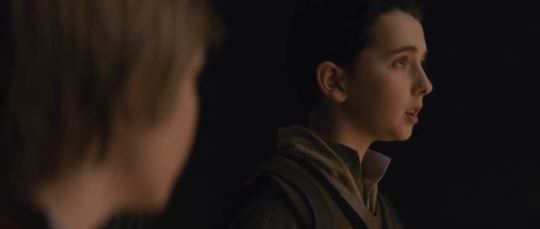
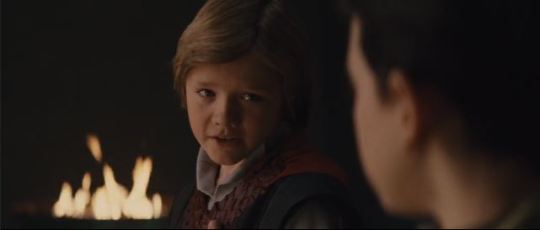
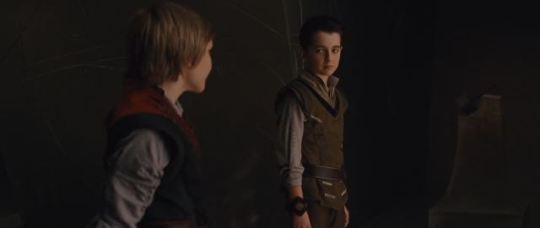
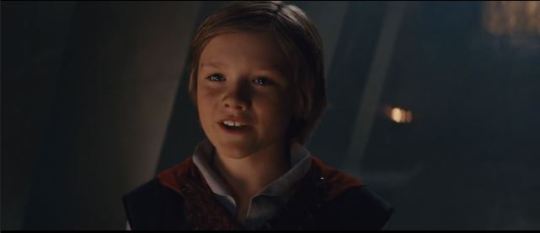
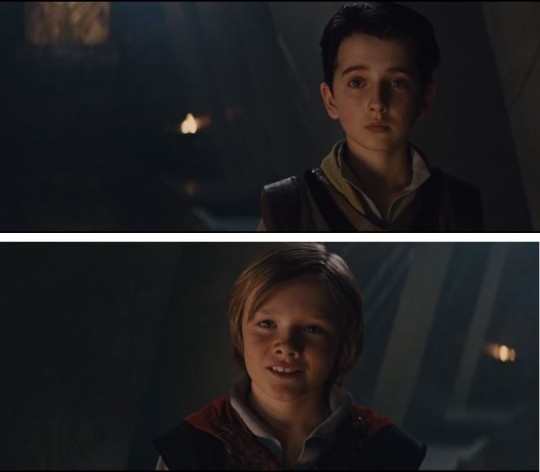
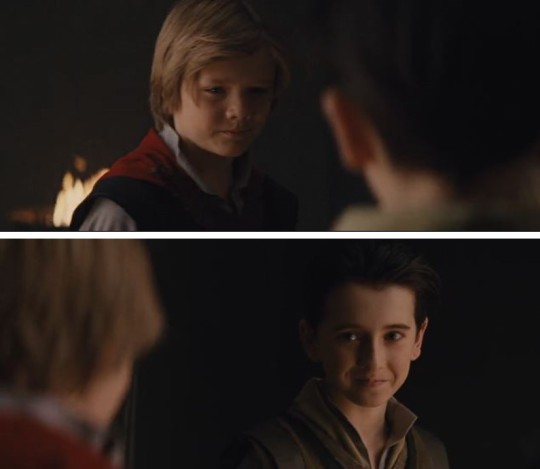
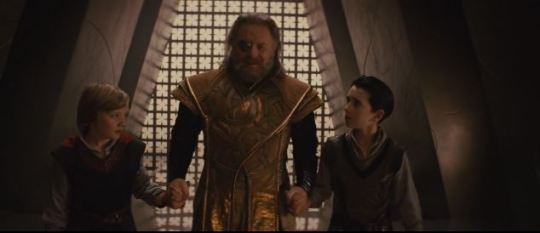
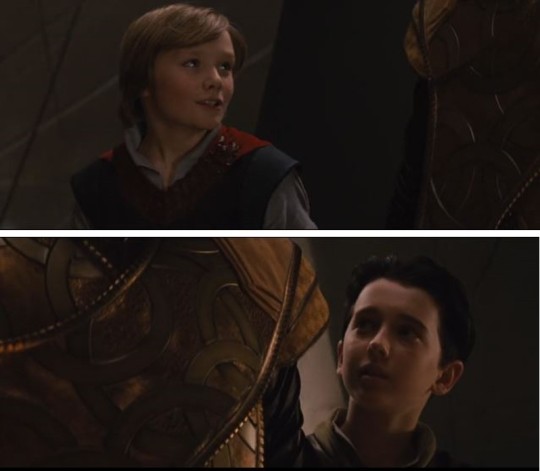
We got to see Thor and Loki as children in Thor 1. Let’s see what can be understood from their scene as children.
The scene starts when Odin finishing his tale about the war with Jotunheim and shows his children the war prize he got from them, the Casket of Ancient Winters to stop them to cause further harm. His tale portrays Jotuns as villains who attacked Earth with no reason and Asgardians as heroes. He speaks of a long and bloody war with an enemy that is very strong. As all children, Thor and Loki see their father as a hero and invincible, but in their case even more so, because Odin calls himself the protector of the nine realms. But this enemy even took their father’s eye. They must be very strong and scary. They must be monsters. Notice that Odin calls Jotuns, “Frost Giants”, a word that can inflicts fear and has a negative effect. Odin finishes his tale with:
“But the day will come when one of you will have to defend that peace.”
And starts the idea of brother’s competition for the throne right there.
The camera zooms on Thor and Loki’s faces individually.
Loki:
“Do the Frost Giants still live?”
Loki’s face and question shows that he is analyzing this information. His expression and tone also shows caution and that he’s scared(of his own race). this can be an indication that he’s a sensitive kid. He has just heard a tale of war and death and it doesn’t interest him. Although he’s scared, he is still curious and wants to know more.
Before Odin has a chance to answer, Thor confidently declares:
Thor: “When I’m king, I’ll hunt the monsters down and slay them all!”
The camera cuts to Loki..
The way Loki looks at him after this, is very telling. There’s a bit exasperation and annoyance in his expression. As if he’s thinking “why are you
like this?” and “why do you think it’s you who’s going to be king”. There’s also embarrassment because Thor’s reaction made him look
weak, and envy because he thinks he isn’t as brave as his brother.
Thor continues,
full of excitement and admiration for his father, his hero: “Just as you did, Father”
This whole part shows that Thor is completely sure and confident that he is the one who is going to be the king. That it doesn’t matter to him if there are any monsters. He is going to kill them all. He is going to be like his father.
The next moment is very important in the movie. Both kids are looking to their father and waiting for his answer. Which one of them get his acknowledgment and approval? Does he think it’s better to know about the Frost Giants or just kill them all?
Loki’s face shows insecurity while Thor’s shows confidence. And both of them are longing to be validated by their father.
Odin knows this damn well. He looks at both of his sons and choose to answer them indirectly:
“A wise king never seeks out war but he must always be ready for it.”
Translation: It doesn’t matter to know about the Frost Giants more than it’s needed to defeat them. You must always be ready for war but don’t seek it.
He answers both of them with that. But in doing so he also confirms what Thor said, that Frost Giants are monsters. And the only information you need to know about them is how to beat them. There it is. Odin validating racism for his sons, knowing one of them is from the same race he just covertly confirmed to be monsters.
I was so shocked by this moment the very first time I watched this movie. I expected for Odin to tell Thor that they are not monsters. But instead Odin answered like that and it made me sure that this moment will come back to bite them(and us).
As Odin walks away from the children, Thor and Loki look at each other. There is love, excitement and innocence in their faces. And then they both run to reach to their father and grab his hands.
Thor states with confidence and determination while looking at Odin:
“I’m ready Father!”
Loki grabs Odin’s other hand and with desperation and insecurity tells Odin:
“So am I!”
Thor looks at Loki irritated. Loki looks at Odin, desperate to be acknowledged. Odin says:
“Only one of you can ascend to the throne. But both of you were born to be kings.”
Thor’s confidence returns and Loki’s face turns hopeful.
What Odin did here is pitting the two brothers against each other. His answer implies that only one of them, the better son can be king. This will make them compete against each other. This will make them seek Odin’s approval all the time which makes it easy for Odin to control them.
The way this scene plays out is very clever. The brothers look at each other with love but then run to Odin. Odin comes between them, literally and figuratively. The compete to gain his approval and as Loki’s insecurity here shows and later we find out, favoring Thor are the reasons that truly set the brothers apart.
So what can be concluded from this analysis? That neither Thor, nor Loki were malicious and definitely not towards each other. They got annoyed or irritated with each other but their reactions are as normal and childlike as any other child. Loki shows envy towards Thor, but the love in his eyes surpasses it far more(“sometimes I’m envious but never doubt I love you”). Besides his main concern is getting Odin’s approval. So a sensitive, curious, cautious child who is get upset and scared by the story of war and monsters, whose love for his brother is far more than his envy, isn’t capable of going around stabbing his brother. Also from a more logical point of view, he is intelligent, he knows stabbing his brother, the favorite son I might add, would never help him to gain his father’s approval which is his main goal. This also confirms what Loki later says to Thor:
“I never wanted the throne. I only ever wanted to be your equal!”
He wasn’t after the throne. Getting the throne was the proof that Odin saw him worthy. It was what Odin planted in their mind when they were children.
Kid Thor also isn’t malicious. He’s just a child who admires his father very much and wants to be like him. A child that his mistakes aren’t corrected but enabled and he is treated more favorably and better than his brother. So he learns that he’s better than Loki and learns to treat him the same way as he sees while they grow up. So the assumption that he was a sensitive kid(he was the one who got excited by stories of war and killing monsters) who was bullied by his broody evil brother can’t be correct.
Loki was never as evil and wrong as TR portrayed him. Neither Thor was like a saint and always right. Their relationship is far more complicated than good Thor vs. evil Loki. I don’t accept TR retconning their characteristics like this. Especially when there’s proof that TR’s interpretation of them is wrong.
Tom has mentioned during the ACE comic con panel that he has known about the scene for two years.
This was what Thanos said in this test footage: “I got the information that I need, and now I have to break your neck. It’s just the way it is.”
For reference, here’s some stuff from the Avengers: Infinity War director’s audio commentary during the opening scene:
McFeely: We’re starting the script in December, say January of 2016. There’s no Ragnarok script. They’re in in various stages of development, and so the first scene of this movie changed a bunch. And until we figured out that they were gonna end on a trip off of a destroyed Asgard, we didn’t know where Thanos would find Loki.
Markus: We did know we wanted Thanos to come to Loki. And we would find him in any… We have drafts of him in any number of places.
McFeely: It establishes a vengeance story for Thor by taking out his brother and arguably, his best friend.
Joe Russo: Part of what we wanted to do out of the gate was to unsettle you as you’re watching the film. You’re sitting in the theatre thinking, “Most characters in the Marvel Universe have been safe for a decade.” And we wanted to knock you off-kilter and make theaudience understand that the stakes were going to be significant and the cost was going to be very high in the movie.
Markus: And in that regard, this scene does away with a lot of things from the ongoing MCU. That was… The first MacGuffin from the first Captain America movie just got crushed and stuck into a glove.
Anthony: Bye bye, Tesseract.
Markus: And shortly, the villain from the first Avengers movie…
McFeely: Right. Arguably the best villain in the MCU…
Markus: …will achieve a similar end.
Anthony: Aside from establishing… introducing Thanos as our lead and POV in the movie, this scene also heavily kicks off Thor’s arc in the film.
Anthony: The one thing that’s wonderful, one thing we all really responded to about Thor is where he’s left at the end of Ragnarok with the destruction of Asgard… And there’s something fascinating about exporing these people as you strip away who they are and their built-out identities, and find out what’s left. I think we’re going through a very similar process with Thor in this film, especially with this scene, we’re sort of completing the experience that Ragnarok brought to Thor in the sense that we’re taking away the rest of everything away from him.
McFeely: And remember, he (Thanos) had a relationship with Loki even if it was off-screen where he entrusted him with a duty in Avengers 1 and Loki failed, so...
Joe: He’s making him pay.
McFeely: Yeah. Thanos has a long memory.
Anthony: Yep. Fair enough.
Part of an interview with the IW screenwriters:
Stephen McFeely: Hemsworth came to set, and went, “You guys really need to understand that we are doing something different with Ragnarok.” And we knew they were changing it some, but it was so early in the process, so we flew [Ragnarok screenwriter] Eric Pearson and [director] Taika Waititi in and we had long conversations with them. There are at least a couple of jokes in there Taika himself said in passing that we thought were gold. They showed us a few scenes, so we knew that Thor was being re-toned. And we needed to embrace that.
Christopher Markus: But it was also the realization that even in the “funny” one [Ragnarok], his father and his sister die, and that he’s almost becoming comically unlucky at this point, and to follow that to its natural conclusions.
So in summary, Loki’s death scene was decided since two years ago and he mainly died for the following purposes:
Set the tone for the movie by showing Thanos’ cruelty
For shock value
Give place to the new “best” MCU villain Thanos
Fuel Thor’s motivation for revenge, to further Thor’s storyline and character development from where he left off in Ragnarok
Evidently, none of the above reasons has anything to do with Loki’s arc and character development.
In terms of narrative, it was mentioned in the IW commentary that here Thanos was actually punishing Loki for failing to fulfill his duty in the first Avengers film, but IMO that’s just a load of crap. Thanos was already going to leave the ship; it was Loki who suddenly popped up with his butter knife. Also, what Loki was promised in Avengers was this: “You will long for something as sweet as pain.”
But how could death be worse than pain for Loki, when he had already let himself die twice before? (Just in case anyone wishes to protest that he faked his own death in Ragnarok, please read this first)
In TDW he even said this: “If I am for the axe, then for mercy’s sake, just swing it.”
Loki isn’t afraid and does not cower in the face of death, unlike what had been portrayed of his character in Ragnarok, which was just OOC af. Though I’m glad they rectified this part of his character in IW, the way he died was just too needlessly brutal and meaningless, and also stupid. If the writers truly meant for Thanos to punish Loki in the worst possible way like what was foreshadowed in A1, to be honest it would make more sense to kill Thor instead (just saying). But as it is, the directors and writers were just making excuses and don’t actually care.
I assert that this is a direct result of Thor: Ragnarok. Those who don’t follow the Ragnarok discussions may think this is ridiculous, but really, it’s not. This was what I wrote on 20 Apr, before IW was released:
“…when you consider the fact that Thanos arrived right after he said that, and just minutes after he had told Loki ‘Maybe you’re not so bad after all’. It only proved Thor*’s opinion about Loki right–because of course Thor* can never be wrong–that Loki was just never-ending trouble.
And what I’m worried about is that this will be taken into Infinity War and Loki will be made the scapegoat again.I don’t want Thor* to blame him again and make him feel like the only way he’ll be worthy of his brother’s love and forgiveness is to sacrifice himself to make up for his mistake of taking the Tesseract.”
I couldn’t believe this ended up being exactly what happened in IW, and I hated it so much. While the rest of the audience was laughing, my blood ran cold the moment Thor told Loki “you really are the worst brother”.
By now I think we can all agree that what Loki said—“I hereby pledge to you my undying fidelity”—was meant for Thor. If anyone’s not convinced, here:
‘Undying Fidelity’ was the title of the soundtrack that was playing from the instant Loki started saying ‘I, Loki, Prince of Asgard…’ to the moment Thor collapsed over his body.
Loki was crying when he said that. Assuming those were Loki’s tears (in character), then it was almost as if Loki had been prepared to die, as though his futile attempt at killing Thanos was deliberate. Why?!?!?! Just because Thor changed his mind about saying “maybe you’re not so bad after all” and told him he was the “worst brother”, so he wanted to prove his fidelity using his life??? It was foolish and OOC, is what I think.
But then again, if we consider his character and their relationship in Ragnarok, it might not be that out of character after all… As a case in point, I’ve seen someone say this:
If Loki couldn’t even trick Thor in Ragnarok, what makes you think he can outsmart Thanos?
In Ragnarok, his character was twisted and reduced to comic relief, his sacrifice and redemption in TDW was made to seem like a sham and a joke. A previously complex, multifaceted character was simplified into a misbehaving and terrible brother who would betray his only remaining family for the sake of money(?!). When the God of Mischief was asked whether he had a better idea than “get help”, he answered “no” as though it was supposed to be obvious. The graceful, regal, composed and witty prince of Asgard was played for a fool throughout most of the film. His brother criticized him in a way that made it sound like he had always been incorrigible, even though that’s definitely not true if you watched the previous films. Only when he compromised and became “good” on Thor*’s terms after listening to Thor*’s bullshit of a speech was he deemed redeemable.
In short, Ragnarok “put him in his place”, downplayed his powers, stripped him of his purpose, wits, importance and independence as a character, never gave him the equality and respect he wanted.
The IW writers said this:
“…the first scene of this movie changed a bunch. And until we figured out that they were gonna end on a trip off of a destroyed Asgard, we didn’t know where Thanos would find Loki.”
“We did know we wanted Thanos to come to Loki. And we would find him in any… We have drafts of him in any number of places.”
But with how Ragnarok ended up, it became entirely too convenient. It made him too easy to kill off—they could simply make him sacrifice himself for his brother again, since his sacrifice in TDW was retconned into a faked death anyway.
There wasn’t a need to think of an intricate plot for a character who no longer seemed important—they only needed to put the final nail in the coffin. Since it would serve all their purposes anyway, why not?
Loki was crying when he said that. Assuming those were Loki’s tears (in character), then it was almost as if Loki had been prepared to die, as though his futile attempt at killing Thanos was deliberate. Why?!?!?! Just because Thor changed his mind about saying “maybe you’re not so bad after all” and told him he was the “worst brother”, so he wanted to prove his fidelity using his life???
That suggestion about why Loki apparently deliberately sacrifices himself (to no useful purpose, btw – he knew he couldn’t actually hurt Thanos, and his death did nothing to help Thor’s situation) matches up exactly with @illwynd‘s analysis in this post: that what Ragnarok did to Thor and Loki’s relationship made Loki’s self-immolation the only place left for them to go.
Telling someone who has known trauma around identity and belonging “who you are is as a person is inadequate and I will disown you unless you change to suit my standards” is…
… What Loki needed was to be able to trust in Thor’s love for him: that it wasn’t just circumstantial. That he, as a person, mattered to Thor, and that Thor would be able to re-accept him after his transgressions and would continue to value him. …
But the above scene from Ragnarok, Thor’s ultimatum, would utterly shatter Loki’s trust in all of those things. …
And to me it is fitting, under those circumstances, that Loki would go and get himself killed kinda-sorta on purpose at the first opportunity as well. I mean, last time he was in a similar situation of having been rejected by those he cared about, he threw himself into an abyss. And this time he even got to continue to try to prove himself to Thor while doing it, just like one might feel compelled to do after such an ultimatum.
And the thing is… even if Ragnarok hadn’t done away with Loki’s cleverness and planning ability, it might not be completely OOC for Loki to basically commit suicide in order to prove to Thor that he was good now. After all, Thor* told him that his identity as “the god of mischief” wasn’t valuable; he needed to become someone different, someone straightforwardly heroic. Loki couldn’t trust Thor to trust him, so if he had made a serious effort to do what I think he should have done (and what I think he would have done if Joss Whedon had still been writing…) – namely, insinuate himself into Thanos’s team to “make amends” for his previous failure – he would have feared, rightly, that Thor just thought he was turning wickedly self-interested again, changing his colors to suit whichever way the wind was blowing. Ragnarok would have actually needed to reestablish their mutual trust in order for that gambit to work (as I touched on in this post). As it is… well, as illwynd pointed out, we saw Loki’s response to rejection in Thor 1,when his planning abilities were perfectly intact. (And as usual, anyone who says that was not a suicide attempt, just an attempt to escape punishment, can piss up a rope).
Get it? Cause they’re both blue? And bad guys? I’m hysterical, admit it.
In this meta, I will be examining the similarities between the sibling relationship arcs of Thor & Loki and Gamora & Nebula, from their childhood to their reconciliation (or “reconciliation”, as the case may be).
This meta will be split into two parts: Context and Argument.
The purpose of this meta is to explain why I am dissatisfied with the conclusion to Thor & Loki’s relationship arc. If you’re not a fan of Ragnarok criticism/discussion, this meta isn’t for you, and the tag you should blacklist if you’re following me is “ragnarok discourse”. It’s perfectly fine to tailor your dashboard to your preferences. I do it too. If you aren’t a fan of Ragnarok criticism, but would like to rebut my arguments, you’re more than welcome to do so politely.
Some people who might find this interesting/want to add something… @philosopherking1887, @imaginetrilobites, @lucianalight, @princess-ikol, @illwynd, @incredifishface, and @iamanartichoke (I know Ragnarok criticism isn’t always your thing, but when it comes to the Brodinsons’ relationship we seem to agree). I hate tagging people, but this post was too much work not to. I always feel like I’m bothering everyone. Do feel free to disregard if you would like.
Context
Childhood
Gamora and Nebula both lose everything, Thanos kidnaps them, and they’re trained and mutilated, turned into assassins who travel the galaxy and do his bidding. Thanos pits them against one another in a competition where Gamora always comes out on top. Nebula grew to resent Gamora for winning–that they were in this competition at all since she just wanted a sister–even though Thanos was ultimately responsible/the one at fault for this. Through it all, Gamora remained focused on her own problems, and in so doing unintentionally contributed to Nebula’s (ex: Gamora winning results in Nebula being augmented).
Thor and Loki, compared to Gamora and Nebula, have an idyllic childhood. They’re actually Odin and Frigga’s children. Odin and Frigga are bad/abusive parents, but they are parents. Both Odin and Frigga conceal from Loki his heritage. They allow Thor and others to spout racism against Frost Giants, even in Loki’s presence. They permit Thor’s worst impulses until after someone gets hurt. Odin pits them against one another in a competition where Thor always comes out on top. Loki grew to resent Thor for being the favored son–that they were in this competition at all since he just wanted to be equals–even though Odin was ultimately responsible/the one at fault for this. Through it all, Thor remained focused on his own problems, and in so doing unintentionally contributed to Loki’s (ex: Thor’s own insecurities and resulting arrogance lead to him reinforcing Loki’s insecurities with commands like, “Know your place, brother.”).
Conflict
To summarize the entire active conflict between Thor and Loki (two+ fucking films worth!) would be exhausting, so I’m merely going to enumerate the similarities where I see them.
Both pairs of siblings begin at a relatively equal moral position. Gamora and Nebula have both committed grave crimes against the galaxy at the behest of Thanos and Ronan. Thor and Loki both start firmly convinced of the vileness of the Frost Giant race. Gamora and Thor are, perhaps, worse than their siblings. Gamora easily steals an opportunity from Nebula in GotG. It’s not a stretch to infer Thanos and Ronan favored sending her on jobs, meaning she would have committed more crimes. Thor
has genocidal aspirations, where Loki does not (at first), wanting to destroy the Frost Giants in whole or in part (look at me exercising my knowledge of the U.N. definition of genocide like some pedantic asshole) because of the prejudice he’s absorbed from society and, almost certainly, Odin specifically.
Gamora and Thor both come to the realization that they were wrong. Gamora betrays Thanos and finds a new family, while Thor confronts his greatest flaws and adjusts his behavior and values.
Meanwhile, Nebula and Loki hurt innocent people to achieve their (sympathetic) desires. In Nebula’s case, she helps Ronan attempt to annihilate the Nova Empire in exchange for the opportunity to destroy Thanos, the “father” that’s tortured her all her life. In Loki’s case, he first attempts genocide against the Frost Giants in the midst of a mental breakdown/identity crisis in order to win Odin’s approval, and then attacks Midgard to survive Thanos, get away from the torture, and to lash out at the people he feels did him wrong (Thor and Odin).
At various points, Nebula and Loki attempt to kill their siblings. (I’m not going to list them–you know them.)
Gamora and Thor initially attempt to reason with their siblings, to talk them down from the conflict, but they both, inevitably, give up on them. Gamora gives up on Nebula at the end of GotG. At the beginning of GotG Vol. 2, Nebula is a bounty Gamora means to collect. Thor gives up on Loki twice. First, at the end of Avengers. Second, in Ragnarok.
Argument
You know, looking at the similarities between the sibling arcs, I have to wonder about fandom’s treatment of Nebula vs. Loki. I, for one, have never seen anyone claim that Nebula doesn’t deserve Gamora, despite the fact that both Nebula and Loki try to kill their siblings, lead armies that devastate a city, and attempt genocide/to massacre the people of an empire, not primarily out of a desire to kill (though in Loki’s case there’s certainly a bit of that when it comes to the Frost Giants), but for other reasons (family issues/Thanos issues). Granted, Nebula does both at the same time, whilst Loki spreads these things out, but that doesn’t explain the difference in the fandom’s treatment of these characters and their relationships with their siblings.
It’s a very thoughtful description of the two relationships. To summarize, Nebula and Gamora are independent characters with independent goals who reconcile as equals. Loki is narratively a prop for Thor and he skunks back to Thor’s shadow under the pain of abandonment.
A interesting detail is that Nebula is allowed a clean win in the field where their rivalry was centered (physical prowess). Loki is denied a clean win in the two fields where his rivalry with Thor was at its peak: he’s shown as a very lousy king/leader AND the generally unworthy brother throughout the film.
Not only that, but the movie shows him up in areas where he used to have the upper hand on Thor – manipulation and trickery. If you can call Thor’s hamfisted tactics “manipulation” and not bludgeoning. What next, are they going to make Thor an accomplished sorcerer? Oh wait, they already got Strange to overshadow Loki there too.
That’s a pretty standard narrative/mythic trope, the “trickster tricked.” It happens in the Norse myths, as when Loki turns into a salmon to try to escape punishment for causing Balder’s death and then Thor catches him in the fishnet that Loki had been weaving. (A very literal version of the weaver of schemes being caught in his own net.) We saw a little bit of that in TDW, when Thor handcuffed Loki instead of arming him (“I thought you liked tricks”) and pushed him out of the Dark Elf ship onto the skiff (“You lied to me. I’m impressed”). In theory, I don’t have a problem with that.
What @foundlingmother points to as the problem with their “reconciliation” is exactly right. Unlike GotG2 with Nebula, TR doesn’t even acknowledge, let alone validate, Loki’s perspective on the sibling conflict. Of course the in-story reason Loki doesn’t rebut Thor’s assessment is because he’s paralyzed by the obedience disk… but that parallels the structural narrative situation, too. He’s being silenced, physically by Thor* and narratively by the film’s implied perspective (which basically lines up with Thor*’s). By acquiescing to Thor*’s demands, apparently because he’s responded to the ultimatum, Loki appears to confirm Thor*’s and the film’s diagnosis that all of the problems in the relationship were the result of Loki’s selfish, capricious badness – never mind that 3 previous films made a point of showing that this is not the case.
Yes, more power to them. I just wish they wouldn’t imply we’re crazy and stupid (and flat out say we’re wrong) for not seeing it as positive… Like, I’m sorry I don’t see Thor leaving Loki with a device meant to keep slaves in line active on him as this sweet moment of brotherly acceptance. (Sorry, lots of posts getting on my nerves lately. Couldn’t help but vent.)
OK guess i lied about not going into any more detail in a public post.
See, a lot of the complaints I have seen about it, and a lot of the derisive responses to those complaints, have been about whether the device itself was cruel. But to me, that’s… missing the point a bit, at least with the way I see it, because I am completely not complaining about the physical pain Thor inflicted on Loki. They can bash the shit out of each other, that’s fine; I’m sure if you tallied up who had hurt who when, they’d both have a long list. I do think it was… reckless, to say the least… for Thor to leave him there helpless without any certainty of who would find him, but I would be able to overlook that as a lapse in judgment under other circumstances.
What bothers me is why. Telling someone who has known trauma around identity and belonging “who you are is as a person is inadequate and I will disown you unless you change to suit my standards” is…
I mean, I know some folks reading this are not gonna hear what I’m saying but are going to hear what they think I’m saying. So let me clarify. I am not saying how horrible Thor is for saying it. I don’t care whether it’s right or wrong, an acceptable or unacceptable action. That is entirely irrelevant. It could be 100% justified… but it would not have achieved the end that the movie claims. What I’m saying is that regardless of whether Loki got out and followed him back to Asgard, and regardless of whether they hugged and made nice with each other, that conversation did the opposite of what needed to happen to heal their relationship, and it may have effectively destroyed any chance of future healing between them.
The fracture in their relationship was around trust—not just Thor’s trust in Loki but also Loki’s trust in Thor. That was something that TDW got very right, for all its other flaws, because it showed that Loki started to come back from the edge when Thor chose to extend trust to him, treated him like his brother, took him seriously, and generally allowed Loki to believe that their relationship was not permanently stained. What Loki needed was to be able to trust in Thor’s love for him: that it wasn’t just circumstantial. That he, as a person, mattered to Thor, and that Thor would be able to re-accept him after his transgressions and would continue to value him. And Thor showing him so through his actions was working to fix their relationship and give them the space to talk things through
with some kind of honesty
and work their shit out. It was working, to the extent that Loki fully intended to die to save Thor. (The fact that Loki took advantage of circumstances when he woke up alive doesn’t change that and is, to my thinking, wholly in line with his character and his need to not let his feelings be used against him. Just died for your brother in a blatant display of love and loyalty? whoop better go and be a dick to fuck that right up!).
But the above scene from Ragnarok, Thor’s ultimatum, would utterly shatter Loki’s trust in all of those things. And, importantly, it would do absolutely nothing to heal Thor’s trust in his brother, either, because… I mean, it was compliance under threat of abandonment. That really doesn’t prove anything about someone’s trustworthiness or whether they have “changed.” All it proves is that you know where their buttons are located.
And that is exactly where the movie leaves it, with trust thoroughly shattered on both sides. Which is the end of any relationship if serious action isn’t taken to repair that trust. But no such action is shown or even suggested. Loki coming to save the day wouldn’t do it; he’d rushed to Thor’s rescue as recently as the previous movie, so that’s hardly new. Them fighting side by side wouldn’t do it; they’d done that thousands of times before. Hugs likewise. And if the issues were deep and serious enough to cause the breaking of a centuries-long brotherly bond, how could they possibly be resolved off-screen, without so much as a hint of how it happened? They couldn’t. It just doesn’t work, narratively speaking.
So to me, that movie ends with their relationship completely broken. They are inhabiting the same space and they are ostensibly on peaceful terms, but any basis for trust has been destroyed. By any meaningful definition, their relationship is deader than a doornail.
And to me it is fitting, under those circumstances, that Loki would go and get himself killed kinda-sorta on purpose at the first opportunity as well. I mean, last time he was in a similar situation of having been rejected by those he cared about, he threw himself into an abyss. And this time he even got to continue to try to prove himself to Thor while doing it, just like one might feel compelled to do after such an ultimatum.
So yeah that’s why I call it a breakup. Because I don’t see any other way I can interpret it.
Thank you so much for saying this publicly. It was talking to you that led me to realize that Ragnarok destroyed the main characters, especially Thor, so thoroughly that I couldn’t make excuses for it, couldn’t keep liking it for bringing Thor and Loki back together even if I was uncomfortable with the way it belittled Loki’s grievances and turned Thor more self-absorbed than he had been at the beginning of Thor 1. Thank you for adding this to the discussion and redirecting it to something that really is more important than the points it has been getting unproductively stuck on. I’ll admit to getting stuck on the obedience disk, too, because one of the things that made me most deeply uncomfortable, even before you convinced me that Thor* was never giving Loki a genuine choice, was how smug, how self-satisfied and even gleeful Thor looked while seeing Loki in pain. But you’re right that that by itself could be explained as the anger of the moment (and I did try to explain it that way in some post-Ragnarok Thorki fanfiction, while also having Loki try to re-assert some independence and Thor actually listen to Loki’s side of things… as if that wouldn’t be too little, too late).
I think this point is especially important and unusual in the discourse:
I am not saying how horrible Thor is for saying it. I don’t care whether it’s right or wrong, an acceptable or unacceptable action. That is entirely irrelevant. It could be 100% justified… but it would not have achieved the end that the movie claims. What I’m saying is that regardless of whether Loki got out and followed him back to Asgard, and regardless of whether they hugged and made nice with each other, that conversation did the opposite of what needed to happen to heal their relationship, and it may have effectively destroyed any chance of future healing between them.
It seems like a lot of the disagreement between the Loki fans (myself included) and the Thor* stans has been about whether Thor* was justified in doing what he did. The Thor* stans insist that Loki was a terrible brother, constantly stabbing and betraying Thor, so he deserved to be punished and needed to be told that Thor* wasn’t going to put up with his shit anymore; and the Loki fans have probably spent too much time arguing that before Thor 1 Loki hadn’t given Thor any reason to mistrust him, and since then he’s had reasons for all of his betrayals. I think some of us have also added that punishment and ultimatum aren’t the means to real reconciliation, but it’s probably focused too much on whether or not Thor* is being physically, psychologically, and/or emotionally “abusive,” with all the baggage that word carries with it.
You’re emphasizing exactly the right issue that everyone invested in Thor and Loki’s relationship, whether sexual/romantic or just brotherly, should care about, regardless of which character they favor and independent of the moralistic language that people on Tumblr love to weaponize (and I don’t exempt myself here).
Telling someone who has known trauma around identity and belonging “who you are is as a person is inadequate and I will disown you unless you change to suit my standards” is…
The fracture in their relationship was around trust—not just Thor’s trust in Loki but also Loki’s trust in Thor. … What Loki needed was to be able to trust in Thor’s love for him: that it wasn’t just circumstantial. That he, as a person, mattered to Thor, and that Thor would be able to re-accept him after his transgressions and would continue to value him. …
But the above scene from Ragnarok, Thor’s ultimatum, would utterly shatter Loki’s trust in all of those things. And, importantly, it would do absolutely nothing to heal Thor’s trust in his brother, either, because… I mean, it was compliance under threat of abandonment. That really doesn’t prove anything about someone’s trustworthiness or whether they have “changed.” All it proves is that you know where their buttons are located.
OK, now all I’m doing is quoting you, but that’s because I really like the way you put it and it’s really, really important.
No, I don’t
agree with it. This is the trope that TR was trying to maintain by retconning
all the previous canon in the franchise. Thor has never been a love martyr(except maybe once)
because:
1. Thor is
not the perfect and blameless angel who loves his completely evil brother. Thor
and Loki are both flawed characters and their relationship has been on the rocks because they both hurt each other and never actually talked about it.
2. Unlike
what Thor thinks, most of Loki’s horrible actions wasn’t about hurting Thor.
3. It didn’t
take a long time until Ragnarok for Thor to give up on Loki. Thor gave up on him
in Avengers.
Let’s discuss
these points in more details:
Thor starts
his journey as an arrogant warmonger prince. He is the golden child of his
realm and Loki is his shadow. No one respects Loki or take him seriously the
way they respect Thor. Not guards, not Heimdall, not Thors’ friends and not
even servants. The way Thor treated Loki certainly had an effect on Loki’s
situation(aside from other cultural aspects). Thor doesn’t respect Loki: “Enough!”,
“Know your place brother!”, “Some do battles, other do tricks”.
He doesn’t even look at Loki, when Loki speaks with him. The way Loki reacts
after these mistreatments doesn’t show his surprise, it shows that he’s used to
them. Despite all of this, Loki still cares about Thor and Loves him: “You are
my brother and my friend. Sometimes I’m envious but never doubt that I love you”.
Sabotaging
Thor’s coronation was not a betrayal to Thor. Loki knew that Thor wasn’t fit to be a king yet, and
he tried to stop it. Just like Thor tried to take the throne from Hela, who was
the rightful heir, because she wasn’t suitable for the job.
I always
think the worst thing that Loki has ever done to Thor is lying to him when Thor
was in SHIELD when he was already down after failing to lift Mjolnir. Thor’s “Can
I come home?” and his tears always break my heart.
Now the
paragraph says that Loki tried to kill Thor at least twice! No, Loki almost
killed him once with the destroyer. But that was it. In their fight on the
Bifrost he only tried to stop Thor and stall him so he can destroy Jotunheim.
After that Loki never tried to kill Thor. He dropped Thor in the Hellicarrier
because he knew if Mjolnir could crack that glass, it could also break it. He
was never surprised that Thor showed up later. And don’t tell me him stabbing
Thor with that tiny dagger was an attempt on Thor’s life.
Loki trying
to commit genocide on Jotunhim wasn’t about hurting Thor, it was about proving
his worthiness to Odin. Loki killed Coulson mostly because he was in his way
and he was threatening Loki with a destroyer gun. But faking his death to usurp Odin? Really?
*sighs* Loki’s illusions are not solid unless it’s on the person. So Loki
getting stabbed by Kursed wasn’t an illusion. He was really stabbed through
the chest to save Thor. He had no way of knowing what would happen when he attacked
Kursed. This wasn’t planned. And he couldn’t know that he would survive it. So
after he survived he didn’t tell Thor because Thor promised he would return
Loki to his cell. Usurping the throne from Odin had nothing to do with Thor.
Again it wasn’t about hurting Thor. It was about getting his revenge on Odin
for sentencing him to solitary confinement for life and all the other awful
things he’d done. Then Loki as Odin offered the throne to Thor. Loki even asked him to confirm
that it was really what Thor wanted and wasn’t Jane’s wish. None of the things
that the paragraph mentioned was an act of betrayal against Thor. So the line
that Thor says in TR: “I trust you, you betray me. Round and round in
circles we go” is not true.
Now let’s
talk about Thor giving up on Loki and the only situation that love martyr trope can be applied to him. When he found Loki on Earth, first he asked
about Tesseract, then he said Loki’s grievances were imagined slights and then threatened
him. He once again tried to reason with Loki on the Stark Tower and was stabbed
for it. That was the last time Thor ever tried to talk to Loki. That was when
he gave up on Loki. It was obvious that Thor had forgiven Loki after everything Loki did to him in the first Thor movie and still wanted Loki to go home. He made mistakes when he was talking to Loki, but imo forgiving Loki after the way he lied to him and almost killed him was a big deal and that makes Thor a love martyr. But then Thor gives up on Loki after he is stabbed. And that’s the end of him being in the love martyr trope. He never visited Loki when Loki was imprisoned. Not even to
tell him that their mother was dead. Even when he went to Loki for help, Thor
treated Loki like a stolen relic(“locked away here until you may have use of
me”): “I did not come here to share our grief” “I grant it to
you, vengeance, and after this cell”.
Thor and
Loki both loved and cared about each other despite the fact that the other one
hurt them. But Thor is not a love martyr. He never tried to talk to Loki and
understand him about his just grievances. He never asked Loki what happened to
him after he let go. He also made mistakes. He is not blameless in all of this.
And I just talked about the Thor we saw in every movie except TR. Because TR
Thor is very ooc and he constantly dismisses Loki and his pain. In other movies Thor simply doesn’t understand Loki. In TR he just doesn’t care to understand despite Loki trying to explain to him and trying to find a common ground with Thor. What Thor does in TR is a disgusting reverse psychology method, not giving up on Loki. Because “you’re late” implies that Thor knew Loki would come. So imo that paragraph in TV tropes page got it all wrong.
what else can loki lay claim to that thor doesn’t already have?
Oh, interesting.
Of course, for every secret there’s a reason. It’s irrelevant to Thor. It would burden Thor to know. It would only cause Thor pain. And there’s truth in all of those reasons.
But he also just wants the luxury of being the sole possessor of certain experiences or pieces of knowledge, particularly, I imagine, if those secrets are deeply personal.



 Loki is the Philosopher King