tzikeh:
iopele:
queerspeculativefiction:
heidiblack:
pillowswithboners:
luchagcaileag:
This isn’t because Burger King is nicer in Denmark. It’s the law, and the US is actually the only so-called “developed” country that doesn’t mandate jobs provide a minimum amount of paid vacation, sick leave, or both.
kinda debunks that claim that they can’t afford to pay their workers those sort of wages and still make a profit
Its corporate greed, plain and simple.
It is the same in Sweden. It is so funny every time an american company opens up offices here and then tries to do it the american way and all the unions go “I don’t think so”.
Like when Toys ‘r Us opened in sweden 1995.
They refused to sign on to the union deals that govern such things as pay/pension and vacation in Sweden. Most of our rights are not mandated by law (we don’t have a minimum wage for example) but are made in voluntary agreements between the unions and the companies.
But they refused, saying that they had never negotiated with any unions anywhere else in the world and weren’t planning to do it in Sweden either.
Of course a lot of people thought it was useless fighting against an international giant, but Handels (the store worker’s union) said that they could not budge, because that might mean that the whole Swedish model might crumble. So they went on strike in the three stores that the company had opened so far.
Cue a shitstorm from the press, and from right wing politicians. But the members were all for it, and other unions started doing sympathy actions. The teamsters refused to deliver goods to their stores, the financial unions blockaded all economical transactions regarding Toys ‘r Us and the strike got strong international support as well, especially in the US.
In the end, Toys ‘r Us caved in, signed the union deal, and thus their employees got the same treatment as Swedish store workers everywhere.
The right to be treated as bloody human beings and not disposable cogs in a machine.
and that story right there? is exactly why Republicans in the US work so hard to bust unions. it’s because unionizing WORKS and they’re terrified of workers actually having some power.
It makes me despair for Americans that so many of us are so fucking ignorant of how badly we’re treated. People are proud of the fact that they manage to work three jobs to get by, without any understanding of the fact that they shouldn’t have to. But they’ve been sold a bill of goods that anyone who can’t hack it is a lazy freeloader taking “good people’s” taxes like a thief.
It’s almost as if the country was born to abusive parents, and has never known any other life, so it can’t imagine not being abused….
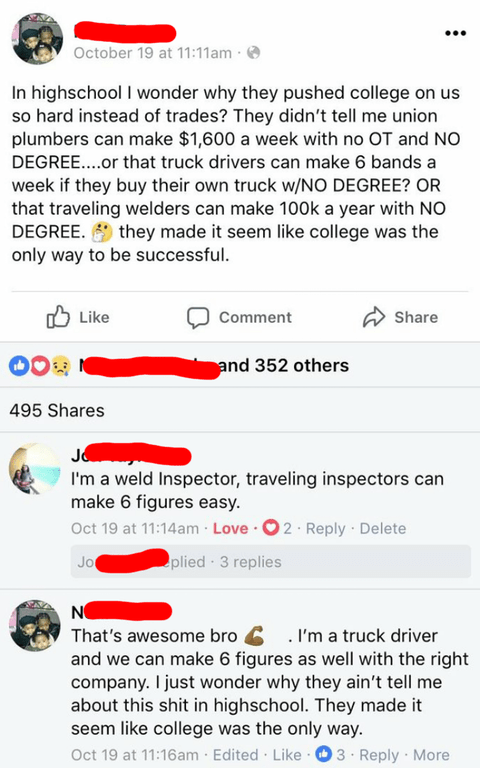
Please, please read about the history of organized labor in the U.S. It might sound like boring topic, but we HAD THAT HERE.
The New Deal did not spring fully formed from the mind of FDR – it only happened because the labor movement ran their own candidates, and union supporters organized and worked tirelessly getting working class people registered to vote. They swept Washington and got us a federal minimum wage, workplace safety regulations, and extensive legal protection for unions so they could wield their power just like they did in Sweden. Throughout the 1940s, unions sprung up across the country at an astonishing rate, which is part of the reason so many Boomers grew up in, and were themselves part of, the fabled American middle class.
What happened? The robber baron conservatives used the next economic recession to turn the tables. How? Well, we invited it by splitting our cause down the middle and refusing to get on the same page. This actually was not very long ago – the reason “we’ve never known any other way” is because modern disdain for unions is exactly as old as the Millennial generation. Once the wheels fell off, Boomer Democrats couldn’t or wouldn’t put them back on – because they’d never known a world as grim as the one their parents fixed, and their own children inherited.
In [1980] Ronald Reagan was elected president, espousing a
free-market and antigovernment perspective that was very unfriendly to labor’s interests. Reagan fired the nation’s air traffic controllers at the nation’s airports and destroyed their union in 1981. He also appointed leaders to the federal agency charged with interpreting and enforcing the nation’s labor law, the National Labor Relations Board (NLRB), who had previously expressed contempt for, and opposition to, the very law they were to uphold. One compared union demands in the collective-bargaining relationship to organized criminal extortion of a business.
The Reagan NLRB from 1980 to 1988 reinterpreted labor law in ways that made more and more union tactics illegal while making a wide variety of unionbusting tactics by employers legal.
The labor movement was unprepared for the onslaught. In the decades preceding 1980, it had lost much of its attractiveness for many former allies
who had helped it prosper in the 1930s through the 1950s. The 1960s Civil Rights and later Black Power movements had challenged a number of unions to incorporate more African-Americans, both as members and as leaders. The predominantly white craft
unions in the building trades initially opposed
the pressure to integrate, causing considerable hostility from many in the black community.
The building trades’ unions did eventually change; by 2001, unionized construction workers were more likely to be African-American than were nonunion construction workers. In time unions became among the most
integrated institutions in American society, but some unions’ unfriendly initial adjustment to the revolution in race relations had at least temporarily separated the labor movement from some of its former allies in minority communities.
Source: The Encyclopedia of U.S. Labor and Working-class History.:
The lesson is it is totally possible for this to exist here, and there’s no reason we can’t get it back. Our great-grandparents and grandparents did it when the very idea that wealthy elites should not be able to exploit people was DANGEROUSLY RADICAL. They were fighting for unions in a political climate where “ten-year-olds can’t work in your death trap factories” was a law as new and as infuriating to their opponents as the Affordable Care Act has been to Republicans in the last decade. If they did that then, we can do this now.



 Loki is the Philosopher King