One overlooked thing that really sets the Lord of the Rings films apart from other franchises is how earnest they are-
Most movies are so afraid of being “cheesy” that whenever they say something like “friendship is the most powerful force in the world” they quickly undercut it with a joke to show We Don’t Really Believe That! 😉 Even Disney films nowadays have the characters mock their own movie’s tropes (”if you start singing, I’m gonna throw up!”) It’s like winking at the camera: “See, audience? We know this is ridiculous! We’re in on the joke!”
But Lord of the Rings is just 12.5 hours of friendship and love being the most powerful forces in the world, played straight. Characters have conversations about how much their home and family and friends mean to them, how hope is eternal, how there is so much in the world that’s worth living for…. and the film doesn’t apologize for that. There’s no winking at the audience about How Cheesy and Silly All This Is; it’s just. Completely in earnest.
And when Lord of the Rings does “lean on the fourth wall” to talk about storytelling within the film, it’s never to make jokes about How Ridiculous These Storytelling Tropes are (the way most films do)…. but instead to talk about how valuable these stories can be. Like Sam’s Speech at the end of the Two Towers: the greatest stories are ones that give you something to believe in, give you hope, that help you see there are things in a bleak violent world that are worth living for
Earnestness is so much cooler than all the hip cynicism in the world. You go LOTR
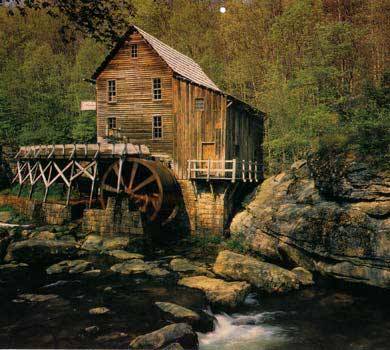
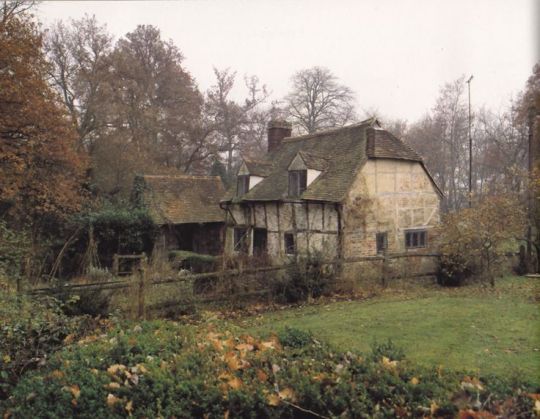
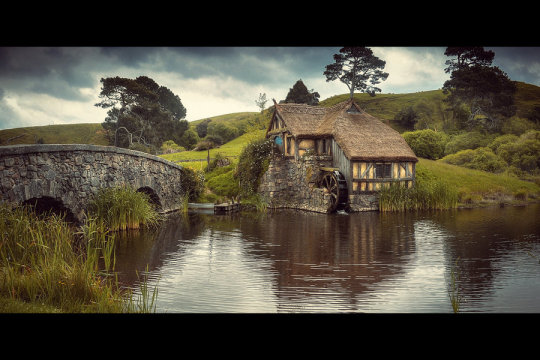
So (according to the concept art book) as the Fellowship travels deeper into Middle Earth, the places they pass through become inspired by progressively older periods of history. The farther along you are in the story, the more ancient the design influences
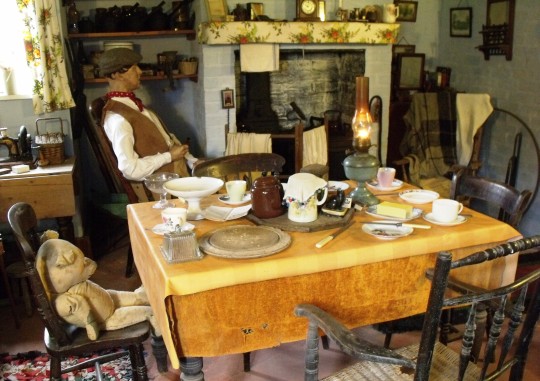
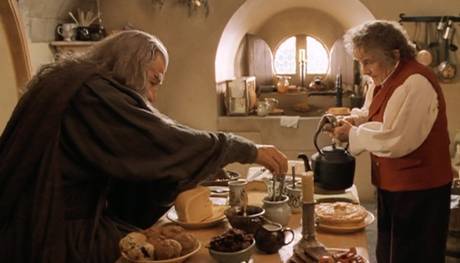
We begin in The Shire: which feels so familiar because, with its tea-kettles and cozy fireplaces, it’s inspired by the relatively recent era of rural England in the 1800s
But when we leave Hobbiton, we also leave that familiar 1800s-England aesthetic behind and start going farther back in time.
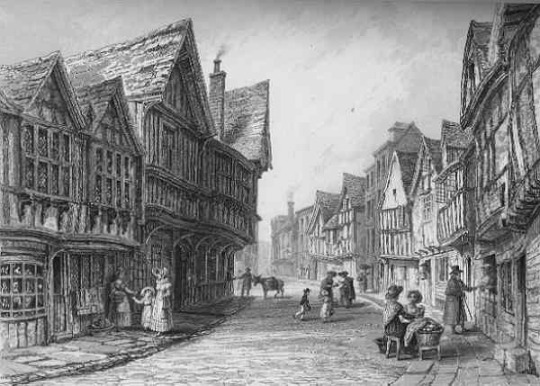
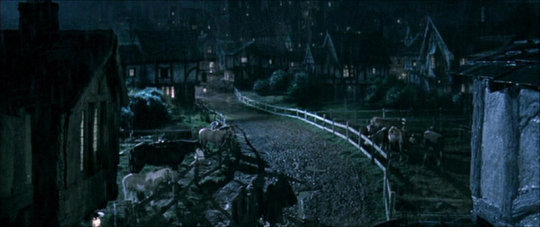
Bree is based on late 1600s English architecture
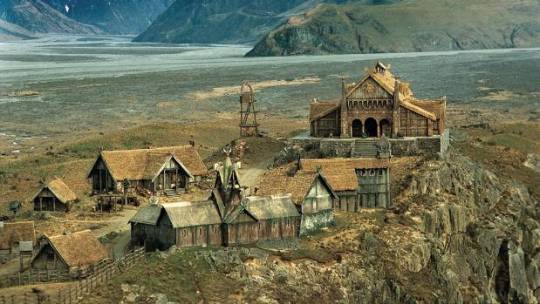
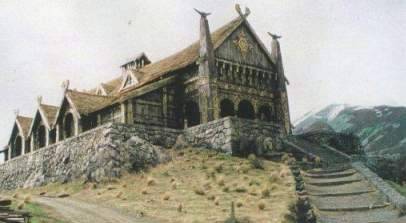
Rohan is even farther back, based on old anglo-saxon era architecture (400s-700s? ce)
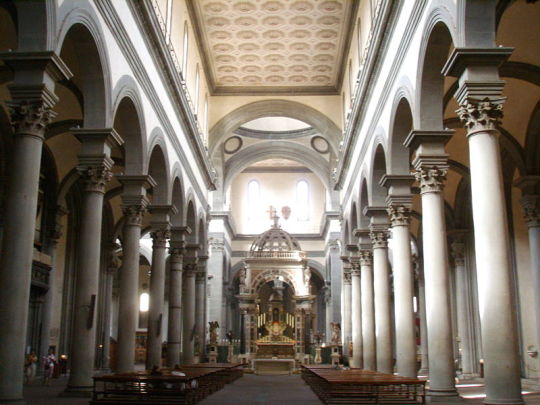
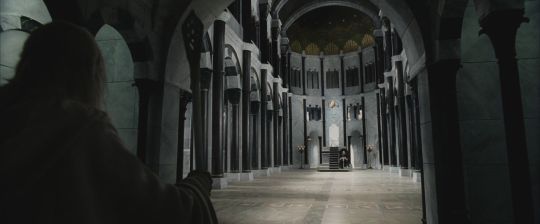
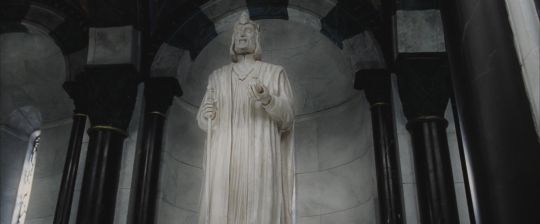
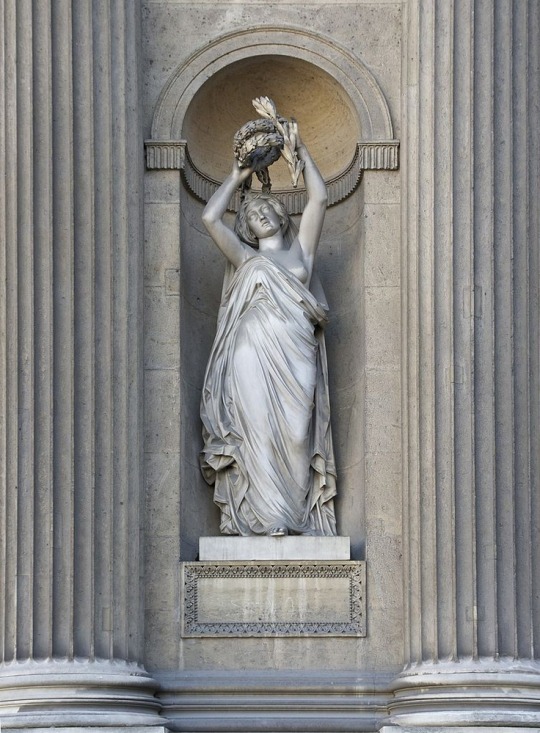
Gondor is way back, and no longer the familiar English or Anglo-Saxon: its design comes from classical Greek and Roman architecture
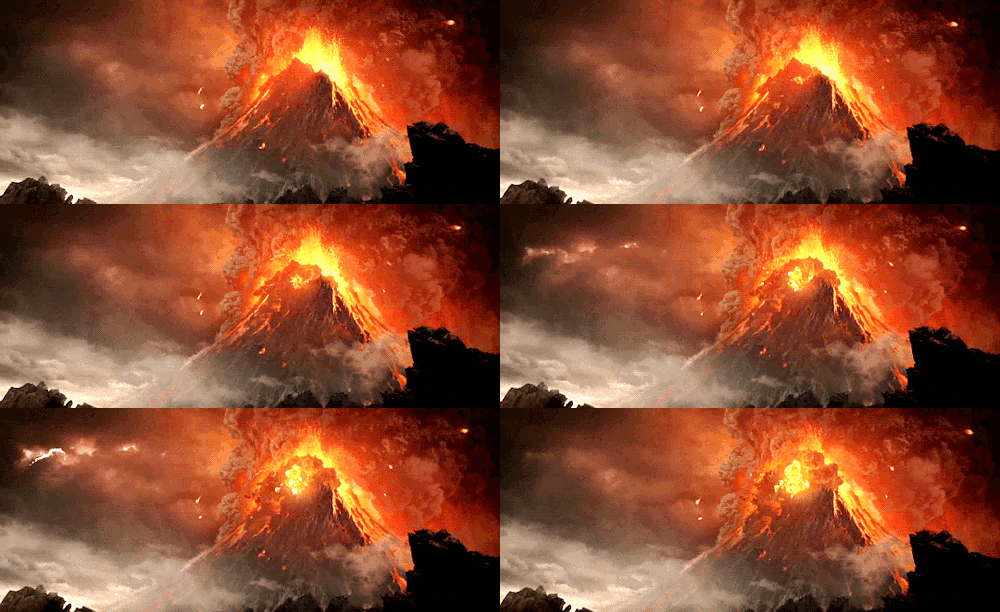
And far far FAR back is Mordor. It’s a land of tents and huts: prehistoric, primitive, primeval. Cavemen times
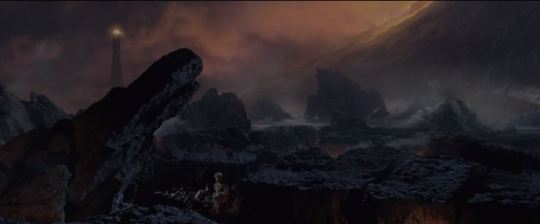
And the heart of Mordor is a barren lifeless hellscape of volcanic rock…like a relic from the ages when the world was still being formed, and life didn’t yet exist
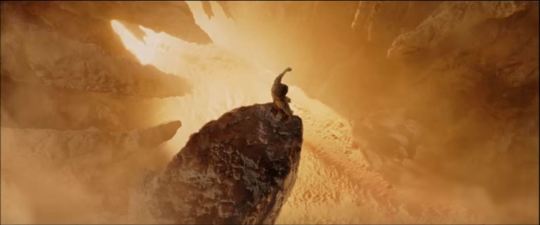
And then they finally reach Mount Doom, which one artist described as
“where the ring was made, which represents, in a sense, the moment of creation itself”
So I get really narky when people pull the whole ‘oh Eowyn’s
storyline came to such a sucky ending; she was really cool going around killing
orcs and Witch-Kings and then she got shoved into a traditional girly role by marrying
Faramir and becoming a healer’ thing, because no. No-no-no-no-no. Not only does that
stray dangerously into the territory of ‘women only have worth if they’re doing
traditionally blokey things’, but that misses almost the entire point of Lord of the Rings.
Tolkien was in the trenches in the first world war, right?
He got all that ‘for death and glory’ shit shoved down his throat, that was the
whole point about the war, it was when so many people came to see how awful and
misleading all the propaganda about winning glory through violence and death was. And Tolkien’s work completely shows
that: it’s why the hobbits, who’ve never craved power or battle the way men do,
are the heroes of the book; it’s
why strong men like Aragorn and Faramir are shown to be lovers of peace rather
than war. It’s why the quote – but I do not love the bright sword for its sharpness, nor the arrow for
its swiftness, nor the warrior for his glory; I love only that which they
defend – is so poignant and beautiful, when
seen in the context of all Tolkien had gone through. He’d seen all but one of
his closest friends die in an utterly pointless war; the prevalent message in
his books is ‘if you’re going to have that many people die, let it be for
something worth dying for.’ (Like
defending your home from the lord of all darkness, for example.)
And Eowyn
might be a fantastic female character, but she’s also got so much development
to go through, and she’s by no means perfect. I find it really interesting that when Eowyn talks to Aragorn
about wanting to go off and fight she never really actually mentions protecting
her people, but speaks about wanting to ‘face peril and battle’, and to
do ‘great deeds’. And it’s not that Eowyn doesn’t want to protect her people, because of course she does, but she’s also got such a
driving motivation within her to do glorious and fell deeds simply for the sake
of valour and renown. It’s one of her defining features, having an attitude
that got so many young men killed in the war and which, obviously, Tolkien
would have been very wary of.
(Also, I think, there’s so much in Eowyn that wants to prove
herself to be more than ‘a mere woman’; because twice in that conversation she
asserts that she’s no mere ‘dry-nurse’ or ‘serving-woman’, but a member of the
house of Eorl and therefore capable of greater things. There’s almost this
slight sense of Eowyn considering herself more than ‘just’ a domesticated woman that I
sometimes get from her in the books? Which is very sad – the idea of Eowyn having less regard for others of her sex who do mind the house or raise the children – and why I so love that ‘I am no man’ moment in RotK. Eowyn’s no longer hiding herself, or dismissing fellow women as the weaker sex,
but acknowledging and embracing the fact that women in all their forms can fuck you up.)
And then we reach
the Houses of Healing, and Eowyn yearning for death in battle just like her
Uncle Theoden, and basically buying into that whole world war one ethos that
Tolkien would have considered so poisonous. Which is why her friendship and
courtship with Faramir is so fricking beautiful.
Remember that quote I wrote earlier? That’s from Faramir. He’s not backing down
from conflict, he’s in no way less of a ‘real man’ than anyone else; he’s just
saying there needs to be more to the fight than simply having a fight. There needs to be a reason; something worth
fighting for. Eowyn recognises that Faramir is a good man in every sense of the
word: he’s strong and valiant, but he doesn’t fight simply to prove himself or
for the sake of winning glory, he fights for other people. And Faramir gently challenges Eowyn on her
idolisation of battle-glory and encourages her not to scorn gentleness or
peace, and he’s so freaking good for her.
(Seriously. Can we just stop for a moment and think about how
wonderful Eowyn and Faramir are for each other: Faramir encouraging Eowyn to
turn towards life and healing and openness while never denying her strength or courage, and Eowyn giving Faramir the
validation and security he never got after so many years of an awful
relationship with his father? I honestly don’t know why I don’t get all giddy
about these two more often, because they make the very best otp.)
And the result of the departure of the Shadow and her
friendship with Faramir is Eowyn’s decision that ‘I will be a shieldmaiden no longer, nor vie with the great Riders, nor take joy only in the songs of slaying. I
will be a healer, and love all things that grow and are not barren.’
I think that last bit is so important because I’m certain
that Tolkien doesn’t mean for Eowyn to immediately pack up her sword and shield
and become a good girl sitting at home with her knitting and waiting for the
men to return home after the fight – after all, she’s going to be the wife of
the Steward of Gondor and there’s a lot of mess to clean up after the War of
the Ring. Eowyn’s probably still going to find herself defending hearth and
home from time to time. But the important thing is that she’s no longer
defining herself simply by the doing of valiant deeds; she’ll no longer compare
herself to the great warriors of her house and feel lacking simply because she
hasn’t killed as many men. Most importantly, she’s not going to take joy only in the songs of the slaying, in
destruction and death. Tolkien was all about healers symbolising life and
rebirth, and Eowyn’s decision to become one – to aid in the preservation of
life rather than the taking of it – is so beautiful. I don’t think Tolkien ever
wrote Eowyn’s ending to make her reclaim her ‘lost femininity’; I think it’s a
lovely way of adding to the ever-present theme in Lord of the Rings of hope and
frailty and healing and friendship over glory and battle and strife.
Still my favorite story from the Lord of the Rings set: Viggo Mortensen bonded so much with the horse he rode in the movies that after filming was over he bought it from its owner. If that doesn’t warm your heart I don’t know what could.
don’t forget that he also bought arwen’s horse for her stunt rider when she couldn’t afford it awww
also sort of relevant viggo also bought the horse that costarred with him in the movie hidalgo and subsequently took the horse (tj) with him to the red carpet premier.
Also most of the Riders of Rohan are actually women because when they put out that call mostly women showed up with their horses and the costume team just stuck beards on them.
if this isn’t the best post i don’t
So you’re saying the entire Rohan army could have killed the Witch-King of Angmar.
Witch King: No living man can kill me!
several thousand riders of Rohan: *rip their fake beards off*
I just discovered that Tolkien used thou and thee pronouns in his original drafts of LOTR to show how certain relationships changed from formal or hierarchical to more familiar, loving, and respectfully equal.
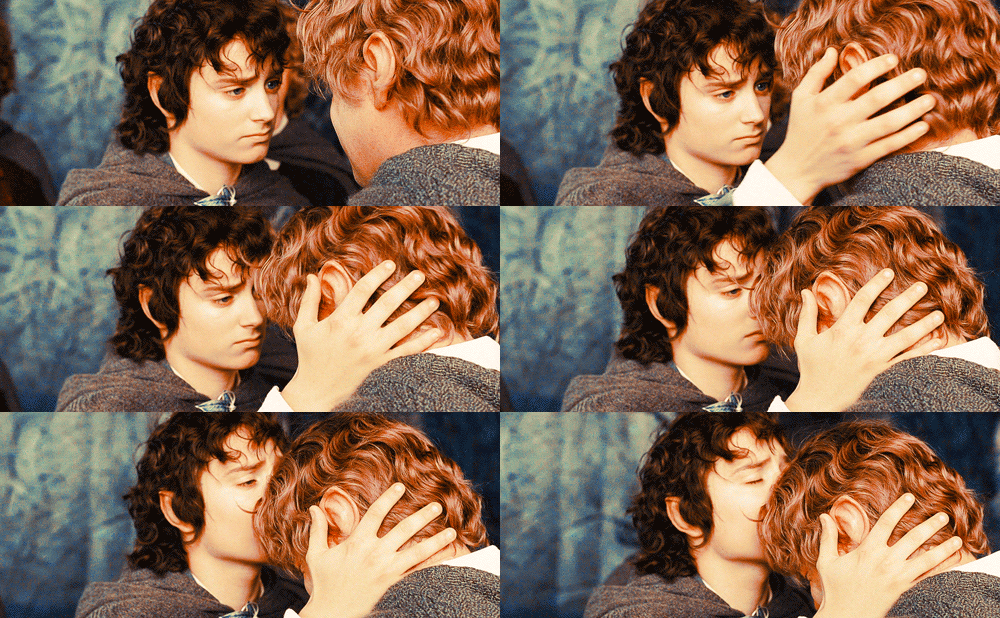
Apparently, the more notable you -> thee shifts occurred in interactions between Gimli and Galadriel, Eowyn and Faramir, & Frodo and Sam.
And in other news, this information has 100% ruined my life bc I now know we could have had informal pronouns in Lord of the Rings.
“DENETHOR’S BURNING HIS SON, Y’ALL!”
This is by far the best addition to any post I’ve ever made.
no man will ever be as attractive as aragorn during his first appearance on lord of the rings: the fellowship of the ring (2001)
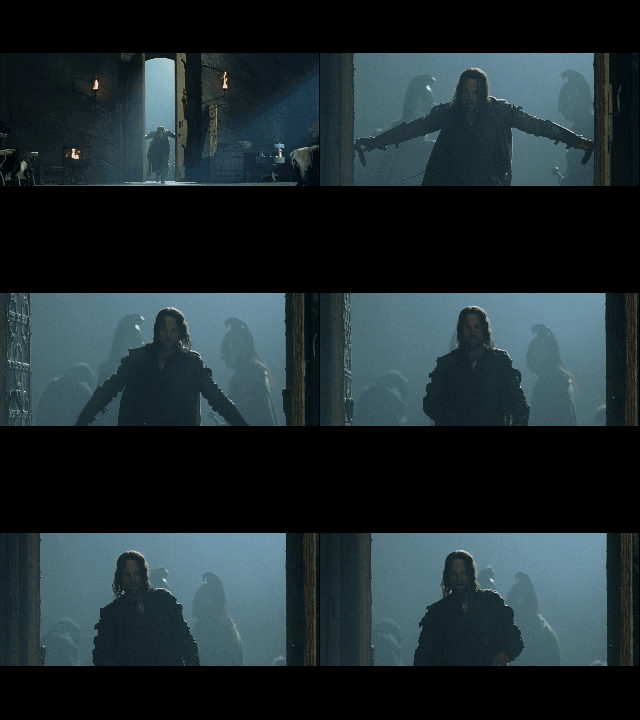
i nominate aragorn opening those giant doors in lord of the rings: the two towers (2002)
Can I also nominate Aragorn raising his sword and running towards orcs with masses of ghosts behind him in Lord of the Rings: The return of the king (2003)?
I wanted visuals.
nah, i’m not up for grimy or stabby aragorn. give me fond-of-these-useless-kids/hobbits aragorn.
Most composers spend just 10-12ish weeks working on a film’s music. John Williams spent around 14 weeks on each Star Wars movie, 40ish weeks total for the whole OT……but composing the LOTR trilogy’s soundtrack took four years
The vocals you hear in the soundtrack are usually in one of Tolkien’s languages (esp. Elvish). The English translations of the lyrics are all poems, or quotes from the book, or occasionally even quotes from other parts of the films that are relevant to the scene
When there were no finished scenes for him to score, Howard Shore would develop musical themes inspired by the scripts or passages from the book. That’s how he got all Middle-Earth locations have their own unique sound: he was able to compose drafts of “what Gondor would sound like” and “what Lorien would sound like” long before any scenes in those places were filmed
Shore has said his favorite parts to score were always the little heartfelt moments between Frodo and Sam
Shore wrote over 100 unique leitmotifs/musical themes to represent specific people, places, and things in Middle Earth (over 160 if you count The Hobbit)
The ones we all talk about are the Fellowship theme, the main Shire Theme, and the themes for places like Gondor, Mordor, Rohan, and Rivendell…but a lot of the more subtle ones get overlooked and underappreciated
Like Aragorn’s theme. It’s a lot less “obvious” than the others because, like Aragorn himself, it adapts to take on the color of whatever place Aragorn is in: it’s played on dramatic broody stringed instruments in Bree, on horns in battle scenes, softly on the flute with Arwen in Rivendell….
Eowyn has not just one but three different leitmotifs to represent her
Gollum and Smeagol both have their own leitmotifs! Whose theme music is playing in the scene can often tell you whether the Gollum or Smeagol side is “winning” at the moment
The melody for Gollum’s Song in the end credits of the The Two Towers is the Smeagol and Gollum themes smushed together (it’s Symbolic)
And then there’s the really obscure ones. Like there’s a melody that plays at Boromir’s death that shows up again in ROTK in scenes that foreshadow a major death or loss
Shore wanted the theme music to grow alongside the characters– so that as the characters changed, their theme music would change with them.
You can hear that most clearly in the Shire theme. Like the hobbits, it goes through A Lot
Like compare the childish lil penny whistle theme you hear in Concerning Hobbits/the beginning of FOTR with (throws a dart at random Beautiful Tragic Hobbit Character Development scene because there WAY TOO MANY to choose from) the scene when Pippin finds Merry on the battlefield, where you hear a kind of shattered and broken but more mature version of that same theme in the background
I could write you a book on how much I love the way the Shire theme grows across the course of these films
Unlike the hero’s themes, which constantly change and grow, the villain’s themes (The One Ring theme, the Isengard theme, etc) remain basically the same from the very beginning of FOTR to the end of ROTK. Shore said this was an intentional choice: to emphasize that evil is static, while good is capable of change
Shore has said that between all the music that made into the movies and the music that didn’t, he composed enough for “a month of continuous listening”……..where can I sign up
Okay I know we always go on about Marvel’s uncanny casting ability.
But if you thought they were the only ones, let me draw your attention to this man:
Viggo Mortensen, aka Aragorn son of Arathorn, aka Sexiest Ranger in Middle Earth
would hike, often for more than a day, to remote filming locations, in costume, for the sake of authenticity
was the best swordsman Bob Anderson (swordsmaster/instructor for LotR, Pirates of the Caribbean, etc) says he has ever trained
occasionally writes poetry (more book!canon than film!canon but um hello)
does all his own stunts
lived all over and speaks about 23940209384 languages
you know that scene at the end of Fellowship when he’s fighting the Uruk-hai? And one throws a dagger at him and he hits it away with his sword? Yeah, the guy who threw it was supposed to miss, but accidentally threw it directly at Viggo. Who just casually Aragorned and hit it away.
They actually cast Aragorn to play Aragorn
Can I just add a few things?
Would randomly give chocolates to the hobbits
According to John Rhys-Davis (aka Gimli), whenever you have a large cast, one or two actors will naturally become the leaders. Guess who ended up in that role.
Single-handedly convinced cast and crew to camp out to shoot a scene in the sunrise
Once hit a wild rabbit with his car by accident. Promptly stopped his car and went to see if the rabbit was dead, needed a vet or if the only merciful thing to do was to finish killing him. The rabbit was dead. Viggo realized he was hungry. So he took the rabbit, made a fire by the roadside and ate it.
According to cast and crew, sometimes you’d just see him disappear in the middle of the night and suddenly he’d come back with fish he’d caught
Had his sword with him at all times. Slept with once.
The best horse rider of the cast, hands down. Rides better than lots of pros, according to a horse trainer. Couldn’t bear to part with his horse at the end of the shooting, so he bough him. The next movie of his also involved horses, and he bought his horse in that one, too.
Knows how to survive in the wild. I’m not kidding.
Hand-stitched a few things in his costume for an authentic “I live away from civilization” Ranger feel. Also told the weapons department to make him a small bow because “Aragorn lives in the wild, he needs a hunting bow, or he’ll starve to death” – literally nobody else had thought about that. Also requested a small stone to sharpen his sword. Suggested that Aragorn would take Boromir’s arm guards after his death.
Speaking of hand-stitching, once he was touring Japan with a reporter for an article. Walked into a store, took a tshirt, bought it, cut off the print and hand-stitched it into the hat he was wearing. The reporter was going “?????????” the entire time.
Peter Jackson literally sometimes called him Aragorn by accident
Reblogging to add that Viggo wasn’t their first choice. They were already into filming when they realized whoever they had cast was not the right choice. How lucky did they get that Viggo was available on no notice?
The original actor they cast as Aragorn was Stuart Townsend, and a day before shooting began, they realized he was too young for the role.
When Peter Jackson called up Viggo Mortensen to ask, Viggo didn’t answer at first and said he’d call the next day to give his answer. When he asked his son Henry about it, Henry told him to take the job as Henry was a big fan of the series.
Henry went on to cameo as an orc in the Pelenor battle.
I didn’t think I could love this man anymore, but here I go
also that whole tale of aragorn and arwen thing where he saw her in the woods at twenty and fell instantly in love and it’s very beren and luthien? lies.
aragorn decided he was going to marry arwen when he was like, six.
and everyone thought it was just the cutest thing, baby estel with his little crush on the great immortal evenstar, and everyone would tease him about it relentlessly and he would get so mad, and pout, because how dare they doubt his word.
(arwen spent a lot of time biting back smiles and nodding very seriously when aragorn brings this up with her. no, estel, I do not know why they are laughing perhaps they have remembered a particularly funny joke.)
and then aragorn grows into this gangly teen and oh my god can you imagine being a pimply greasy teenager around fucking elves it’s a wonder he has any self-image left. His voice breaks every other word and the laundresses are beginning to wonder if something is wrong with the sheets because estel keeps washing them himself and aragorn wants to die, god, arwen is never going to marry him if he stays all elbows and skinny knees and he can’t even look her in the eye anymore without blushing, eye contact is probably something to look for in a husband–
(arwen, who never had to go through puberty because elves don’t do anything so undignified, tries to comfort him by saying she likes his blemishes. aragorn gives her a look of such utter, miserable despair that she starts laughing.)
(this is a mistake. he spends the next three weeks nursing his wounded ego and refusing to see her.)
estel is twenty when he asks for her hand. he is lean, slender and fair as a new tree, and so arwen does not feel guilt in kissing his cheek and gently refusing. he is still green, he will weather greater storms than this–and he takes it as he should, clasping her hand and swearing to ever be her loyal friend.
they write to each other–when she is in lorien, when he wanders with the rangers of the north, fights alongside gondor, travels to distant lands. it is an inconstant tie–he is rarely afforded time enough to put pen to paper; she is reserved so as not to encourage what may not be. (she signs her letters always, your friend. She likes him too well to be cruel in this.)
the years pass. his weariness and strife creeps onto the page, and she sends him tokens to fend off the darkness–leaves from lothlorien, the ribbon from her hair, snippets of poems. it is not enough it is never enough I am sorry, she writes.
his reply is gentle: you are enough. do not stop writing.
(she carries that letter tucked inside her sleeve for a long while, like a talisman–though against what evil, she does not know.)
she is in the house of her grandmother when a familiar voice calls out to her: my lady luthien!
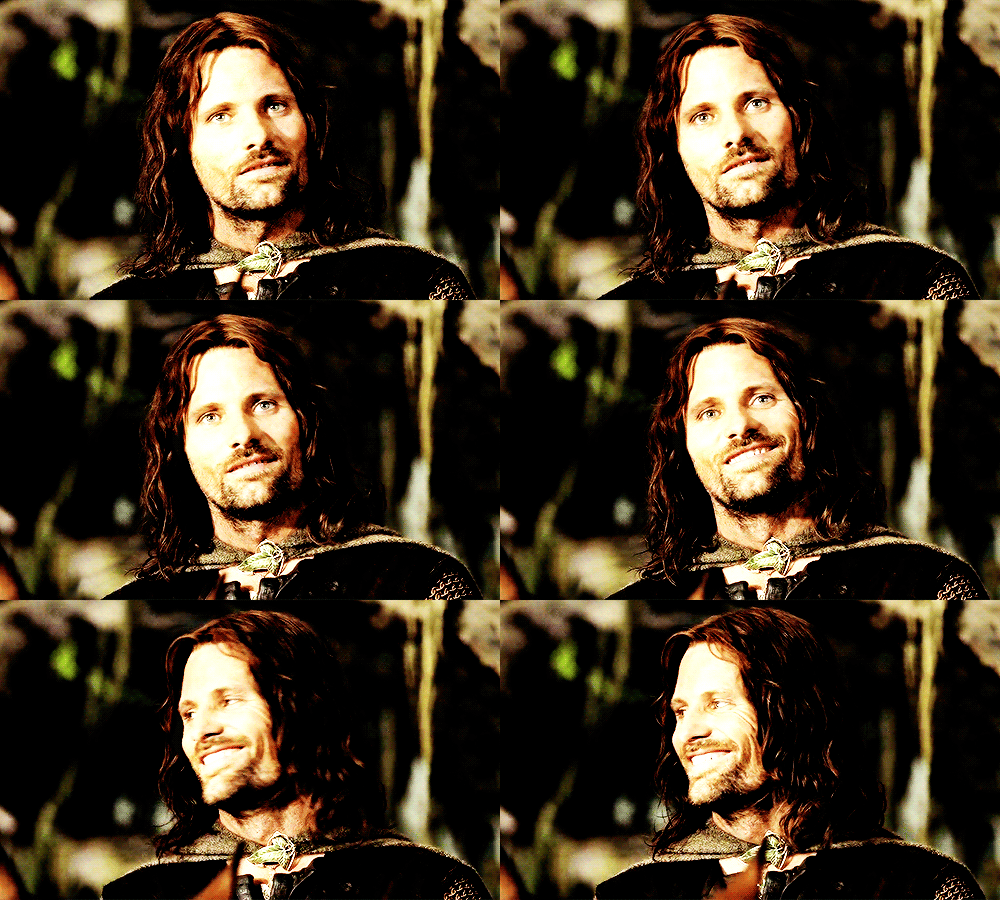
this is when arwen looks up, sees aragorn–broad of chest and rugged, still wearing his battered mail, with one hand balanced lazily on the pommel of his sword. All the trees of caras galadhon are gold but he is shadow and silver, kingliness resting lightly on his shoulders–





 Loki is the Philosopher King