
Forgive me for turning this into a long response, @foxhoundmemos, and @philosopherking1887 for restating a lot of what you wrote in response. I simply believe this an important enough point to make outside of comments.
foxhoundmemos replied to your post: *deep breath* The second most irritating thing a…
@foundingmother, perhaps it’s because the text and framing of Whedon’s Avengers has him as just that, what with the kneel scene being in Germany, and one possibly two people who saw WWII right there, the nasty rape by proxy subtext in the ‘mewling quim’ scene and ramblings about ‘free will’ and his glorious purpose to rule this planet.
Now don’t get me wrong, I am a fan of Loki but it’s more to the presence Hiddleston puts toward the character than either Takkia’s buffon or Whedon’s horndog rapist takes on the character.
As for the scene with The Other or Loki’s trial explanation. Neither one of them have enough presence in the cannon to override the faschist bent that Loki has taken on between Thor and the Avengers. In Thor, Loki went extremes when put under pressure in the middle of a psychotic breakdown something that is not present in the Avengers. It’s clear that this is a Loki whose worst traits have been amplified and hardened while Loki’s issues and reasons no longer matter.
First and foremost, @philosopherking1887 is correct, fascism is not another word for authoritarianism. Ethnonationalism is a key component of fascism. While Loki 100% spouts despotic bullshit, he never says anything that could be consider specifically fascist. I know a lot of people aren’t going to care about this point, but I think it’s important that words mean something, especially when talking about an ideology that’s on the rise again. People who call Loki fascist in Avengers do not understand the actual meaning, only that a vague comparison is drawn between him and Hitler, who was fascist.
Whedon’s sexism is an issue, and there are certainly elements in his movies that are grossly sexist and unnecessary, including the “mewling quim” line and the implication within the lines about Barton killing Nat. Very gross. Two things, however. One, there’s another line of Loki’s that, to me, sounds pretty rape-y: “Perhaps when we’re finished here I’ll pay her a little visit myself.” This implication is a lazy shorthand a lot of writers use to get across how evil a character is. How deranged. It’s gross and dumb. Two, I have to disagree that Loki at any point in the movie feels like a horndog rapist. A sadistic, sexist despot, I can see an argument for, but not horndog rapist.
My counterargument for the idea that Loki literally is a sadistic, sexist despot (or fascist, as fandom refers to it) in Avengers is that the movie frames most of it as a performance masking anger, desperation, fear, loneliness, etc. The scene in Germany stands out more than the scene with the Other, but it’s important to note the purpose of both. They’re both canon, after all, and so both must be factored into an analysis of Loki’s characterization. Loki in Germany is literally performing. That’s the entire point. He’s drawing the crowd’s attention to him so that Barton can do what Loki needs him to, and so that SHIELD will send in its team. The scene with the Other is there to make it clear that Loki’s not 100% in control. That there’s someone watching, ready to torment him if he fails. And it’s far from the only thing in the movie that suggests this. Loki looks horrible when he first appears (and even more so in Thor’s foreshadowing after credits scene), he trips all over himself, he avoids Thor’s questions about who showed him the power of the Tesseract, Thor briefly gets through to him on Stark Tower, he cries, etc. Subtext. And if you want text… Coulson states outright that Loki isn’t going to win because he lacks conviction. So, the movie doesn’t frame Loki as a sadistic, sexist despot. It frames him as an angry, conflicted, traumatized, and dangerous individual who says very intense (and, in the case of the sexism, unnecessary) shit in moments where he’s attempting to manipulate, intimidate, self-aggrandize, etc.
Loki’s issues from Thor aren’t absent from or unimportant in Avengers. The moment he shows up, they are invoked. Selvig refers to Loki as Thor’s brother, earning a dirty look. @philosopherking1887 mentioned the line, “I remember a shadow,” but that entire sequence with Thor’s intended to give us a sense of how deeply hurt and alone Loki feels as a direct result of what happened to him in Thor, and the way that’s fueling his anger and grab for power on Midgard. This attack is still very much connected to the mental breakdown that occurred in Thor, just instead of trying to prove himself and be the hero, as he was trying to in Thor, now he’s trying to hurt his family (as much as they’ve hurt him).
One, there’s another line of Loki’s that, to me, sounds pretty rape-y: “Perhaps when we’re finished here I’ll pay her a little visit myself.” This implication is a lazy shorthand a lot of writers use to get across how evil a character is. How deranged. It’s gross and dumb.
That is entirely correct. What you did not note, however, is that that line is from Thor 1, written by Ashley Edward Miller & Zack Stentz, not from The Avengers, written by Joss Whedon. That bit of grossness cannot be laid at Whedon’s door.
Some of what’s cited as “sexism” in The Avengers is probably better classified as an outdated, i.e. Buffy-era, mode of feminism: the theme of Black Widow being underestimated because she’s a woman and using that underestimation, by both Loki and the Russian mobster at the beginning, to extract information. TVTropes.org calls this the “Wounded Gazelle Gambit”; it might be considered a variant of the honeytrap, except that the female spy uses the assumption of weakness, especially emotional weakness, rather than her sexuality. Maybe I’m less bothered by it than some people because I am still professionally underestimated because of my gender (and stature) and it’s still satisfying to see that subverted, even weaponized. But The Movement has decided that utopianism is the thing to do, so here we are.
I must be innocent or out-of-touch for not interpreting Loki’s threat to have Barton kill Natasha “slowly, intimately, in every way he knows you fear” as having anything to do with rape. Threatening someone with torture is, of course, horrible, but it doesn’t have to be either sexual or gender-specific. The word “intimate” doesn’t always have anything to do with sex, and it’s most powerful when it doesn’t. Killing someone “intimately,” to me, means killing them while looking into their eyes, having seen how they break down in response to severe pain with no end in sight. That’s an especially creepy thing to threaten her with given that Clint is her friend, and it should be creepy, since Loki is trying to unnerve her. But the only things that I read as gendered were (1) targeting her emotional vulnerability and (2) calling her a cunt.

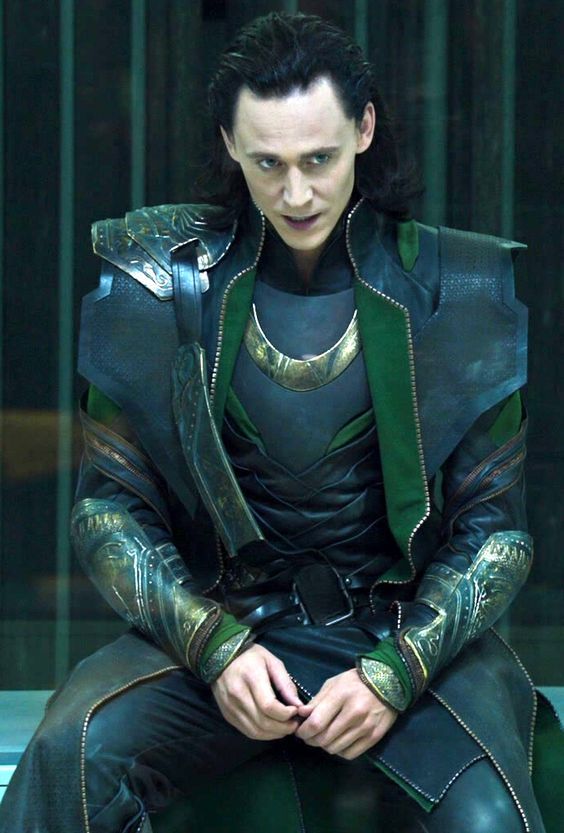
 Loki is the Philosopher King