Unpopular opinion: the movie with the best characterization of a mature Thor is Avengers: Age of Ultron.
The opinions on quality of Thor’s maturity and growth across films will always be subjective, I believe, but Thor in Age of Ultron is underrated in this regard. I think it’s the first movie where we see Thor not necessarily in the process of becoming more mature, but being mature. It’s the first film where Thor isn’t just actively trying to overcome the mistakes of his youth, trying to find his own way in the universe, and/or fighting with sentimental emotions to do what’s right.
I don’t think this opinion is unpopular simply because many people think that it is completely not true, but rather because this film is unpopular. It’s easy not to pay attention to Thor’s characterization when it’s not a fan favorite for a lot of people. From what I can remember, parts of the fandom were fizzling out and the excitement of the first Avengers film was wearing off. However, what I also remember was the overwhelmingly positive reaction to Thor despite it all.
I believe that was in part because Thor was the mature one. Thor was the wise one. Thor was the patient one. Thor was willing to face many unknowns in order to make the right decisions. Thor embodied qualities that people wished were present amongst all the other heroes. Of course, this was all made possible by Thor’s growth over the previous films. Thor was relatively sheltered from consequence for a long time as a prince, but was forced to mature.
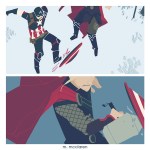
Thor was more somber in Age of Ultron, due to the loss of his mother and his brother. While this could have made him self-destruct and I would not blame him for it, he chose to turn his mourning into something productive. He was shaken by the visions he was given, and chose to go out to find answers despite how frightening those answers may be. Furthermore, while his anger often gets the best of him, he only lost control on Tony Stark.
Why? …because he actually understood the gravity of Stark’s choices. Thor wasn’t having a tantrum. He wasn’t aggravated because he was prevented from doing something he wanted or needed to do. He wasn’t being impatient. He was angry because no one seems to be taking the situation as seriously as they should and if they are they’re wallowing in despair, while Thor has been working tirelessly to find solutions to a situation that could have been prevented.
Thor was the mature one in that film, because he had to be. To me, that doesn’t mean that Thor needs to maintain a serious outlook and attitude across the films moving forward. Thor continues to make difficult decisions despite the amount of pain and loss it brings him, and he’s been able to do so with a serious attitude and with a sunny optimistic disposition as well. Age of Ultron Thor embodies maturity in a lot of ways, though, in a manner that stands out.
It’s just unfortunate that the movie does not equally stand out.
Unpopular opinion #2: AOU is underrated, largely because people have the knee-jerk impulse to demonstrate their moral purity by hating on Joss Whedon for everything he does – not just his characterization of women, which does have some issues, but also his storytelling and characterization abilities more broadly. Plot-wise, AOU is no messier than Civil War; in terms of character arcs and philosophical depth, it’s in a different league entirely.
Unpopular opinion #3: Ragnarok does not show a mature Thor but “with a sunny optimistic disposition” instead of a serious one; it does not depict Thor at all. Infinity War attempts to get back to mature Thor, but is hampered by the need for some kind of continuity with Ragnarok (which showed no such consideration for its predecessors) and the fact that character was taking a backseat to a contrived plot throughout IW.
Unpopular opinion #1b: Thor in AOU is exactly what “funny Thor” should look like. His sense of humor is subtle and deadpan; he occasionally veers into the undignified, but never comes off as a buffoon.
For further clarification, I’m not stating whether I like or dislike any of the films or their creators, nor am I measuring the films against each other in quality. Age of Ultronisone of the least well received movies in the MCU thus far, and the fandom didn’t respond as strongly to it as they did to the previous Avengers film for various reasons that I’m not going to get into because this was about Thor. Not the quality of the film. Civil War also hadn’t been out yet to make any comparison, but that movie also didn’t get the best reception.
So, as I was saying, the movie does not stand out by comparison even though Thor definitely stood out to fans of the character. This isn’t based on my opinion of the movie, but rather critical reception of the film and lack of fandom interest compared to the previous Avengers. Furthermore, despite my disagreements with your opinion re: #3, I never mentioned Ragnarok or Infinity War.
I stated the following:
“Thor continues to make difficult decisions despite the amount of pain and loss it brings him, and he’s been able to do so with a serious attitude and with a sunny optimistic disposition as well.”
…because it is something that I have noticed applies to multiple works across mediums wherein Thor appears. I don’t want to limit Thor’s characterization to very serious or overly optimistic when I have seen both from Thor whilst dealing with making mature decisions. However, that wasn’t why I responded in the first place. It was to further discuss how Thor is noticeably mature in Age of Ultron, which fans responded positively to despite the comparative lack of success of the film.
So, you’re projecting your negative attitudes about Ragnarok onto my own observations of his character even though I was making a general statement about Thor and the mature decisions he has made, perhaps just because I don’t see Thor as a vapid representation of himself in Ragnarok like you do (which, I see no point arguing. People seem pretty adamant about where they stand with this film and it’s not my job to force people to like something that I like.)
I don’t agree with your last point either, but I’m not going to argue against it because it’s all based on subjective likes or dislikes regarding Thor and humor. Again, I’ve seen creators use a wide range of it across mediums as well. So, I really see no point arguing which one is the most “correct.” I’m also not going to argue against it because I don’t see how it’s relevant to Thor’s maturity in Age of Ultron. I don’t see how 99% of this response to me was relevant. Instead, it just reads as completely passive aggressive and hostile towards me for no particular reason other than you don’t like Ragnarok.
I agree with most of what you said about Thor in Age of Ultron, including the bit about why he lost his temper with Tony. I do think he still has some anger management issues, and sometimes forgets how much more fragile humans are, but only when the stakes are very, very high.
You said that AOU was “not a fan favorite for a lot of people” and “did not equally stand out” as a whole; I offered an explanation. I think people have trouble acknowledging any of its virtues, including Thor’s characterization, because of the Whedon-hate.
As to Ragnarok, I read between the lines of the statement “that doesn’t mean that Thor needs to maintain a serious outlook and attitude across the films moving forward. Thor continues to make difficult decisions despite the amount of pain and loss it brings him, and he’s been able to do so with a serious attitude and with a sunny optimistic disposition as well.” That seemed to be referring to the “lightening” of his character in TR and consequently in IW. I was registering my disagreement with the apparent claim that Thor in Ragnarok represents a continuation of the maturity he had achieved by AOU, just with a change in his level of cheerfulness or optimism. Because you said “across the films moving forward,” I assumed you were talking about the MCU rather than the comics, with which I admit to being less familiar. So yes, my response was relevant to something you said, albeit something said indirectly or by implication rather than explicitly.
Finally, I disagree with your claim that judgments about Thor’s characterization in AOU vs. Ragnarok are “all based on subjective likes or dislikes regarding Thor and humor.” Like many people who work on the philosophy of art (not that I’ve worked on it much, but I hope to in the future), I hold that judgments about the quality of works of art are neither wholly objective nor wholly subjective. There is no one single interpretation that is authoritative, but there can be better and worse interpretations, which often entail or at least suggest a certain range of evaluative judgments about the quality of the work. And if anyone is tempted to say “They’re just popcorn movies, why are you taking them so seriously”… Athenian tragedies and Shakespeare’s plays were the popcorn movies of their day. My dissertation advisor writes papers about “The Sopranos” and “Breaking Bad.” I’m not saying the MCU will survive as this age’s great art, but the fact that it’s pop culture doesn’t mean it’s not worth thinking seriously about.
Unpopular opinion: the movie with the best characterization of a mature Thor is Avengers: Age of Ultron.
The opinions on quality of Thor’s maturity and growth across films will always be subjective, I believe, but Thor in Age of Ultron is underrated in this regard. I think it’s the first movie where we see Thor not necessarily in the process of becoming more mature, but being mature. It’s the first film where Thor isn’t just actively trying to overcome the mistakes of his youth, trying to find his own way in the universe, and/or fighting with sentimental emotions to do what’s right.
I don’t think this opinion is unpopular simply because many people think that it is completely not true, but rather because this film is unpopular. It’s easy not to pay attention to Thor’s characterization when it’s not a fan favorite for a lot of people. From what I can remember, parts of the fandom were fizzling out and the excitement of the first Avengers film was wearing off. However, what I also remember was the overwhelmingly positive reaction to Thor despite it all.
I believe that was in part because Thor was the mature one. Thor was the wise one. Thor was the patient one. Thor was willing to face many unknowns in order to make the right decisions. Thor embodied qualities that people wished were present amongst all the other heroes. Of course, this was all made possible by Thor’s growth over the previous films. Thor was relatively sheltered from consequence for a long time as a prince, but was forced to mature.
Thor was more somber in Age of Ultron, due to the loss of his mother and his brother. While this could have made him self-destruct and I would not blame him for it, he chose to turn his mourning into something productive. He was shaken by the visions he was given, and chose to go out to find answers despite how frightening those answers may be. Furthermore, while his anger often gets the best of him, he only lost control on Tony Stark.
Why? …because he actually understood the gravity of Stark’s choices. Thor wasn’t having a tantrum. He wasn’t aggravated because he was prevented from doing something he wanted or needed to do. He wasn’t being impatient. He was angry because no one seems to be taking the situation as seriously as they should and if they are they’re wallowing in despair, while Thor has been working tirelessly to find solutions to a situation that could have been prevented.
Thor was the mature one in that film, because he had to be. To me, that doesn’t mean that Thor needs to maintain a serious outlook and attitude across the films moving forward. Thor continues to make difficult decisions despite the amount of pain and loss it brings him, and he’s been able to do so with a serious attitude and with a sunny optimistic disposition as well. Age of Ultron Thor embodies maturity in a lot of ways, though, in a manner that stands out.
It’s just unfortunate that the movie does not equally stand out.
Unpopular opinion #2: AOU is underrated, largely because people have the knee-jerk impulse to demonstrate their moral purity by hating on Joss Whedon for everything he does – not just his characterization of women, which does have some issues, but also his storytelling and characterization abilities more broadly. Plot-wise, AOU is no messier than Civil War; in terms of character arcs and philosophical depth, it’s in a different league entirely.
Unpopular opinion #3: Ragnarok does not show a mature Thor but “with a sunny optimistic disposition” instead of a serious one; it does not depict Thor at all. Infinity War attempts to get back to mature Thor, but is hampered by the need for some kind of continuity with Ragnarok (which showed no such consideration for its predecessors) and the fact that character was taking a backseat to a contrived plot throughout IW.
Unpopular opinion #1b: Thor in AOU is exactly what “funny Thor” should look like. His sense of humor is subtle and deadpan; he occasionally veers into the undignified, but never comes off as a buffoon.
Unpopular opinion: the movie with the best characterization of a mature Thor is Avengers: Age of Ultron.
I’m not quite sure why I feel compelled to make this declaration, though it may be vaguely related to posts I have seen floating around making statements about Loki and/or Thor that just flat out seem to defy logic. So here are a couple of short lists.
1. Things that are true in my head:
· When we first meet Thor he really would have made an awful king.
· Thor is not a dumb jock. He is intelligent, but at the start of the first movie he is really arrogant and lacks both empathy and the willingness to think about the long-term consequences of his actions.
· That Loki was marginalized by Thor’s friends but not flat-out bullied. That for years he was the annoying little brother who they really didn’t want around but who wouldn’t leave. (As a little sister who grew up in a neighborhood where there were no other little girls to hang around with, I know exactly what it looks and feels like to be Big Brother’s Tag-along).
· When Loki tells Thor that Odin is dead, it’s bc he still thinks Thor would be a horrible king and wants to make sure he stays on earth.
· When Loki sends the Destroyer after Thor, he has no reason to believe Thor has changed at all.
· When Loki sends the Destroyer to eliminate Thor, Loki has also kind of started to go off the rails with self-loathing and is Not Thinking Rationally, and at this time he really did intend to inflict serious, permanent damage. Frigga really should have recognized this and shaken Loki by the collar. I am not sure why Marvel chose to portray Frigga so passively here. She is a an objet d’art in this movie, which is unfair to her character.
· Loki fully intended to commit suicide when he let go of Odin’s spear, both bc of his perceived rejection by Odin and his internalized racism.
· Thor really does love his bro and showed amazing self restraint in not pulverizing him when they fight on the Bifrost, esp bc he has no idea why his little brother is acting like a psychopath.
· Thanos tortured Loki before sending him to earth (come on! look at that after credits scene with Selvig!).
· When Thor initially shows up in the first Avengers movie, he was totally ready to take Loki back to Asgard and give him All The Hugs.
· Loki would have taken All The Hugs had he not been scared shitless of Thanos.
· When Loki dropped Thor from the helicarrier and when he stabbed him, his aim was to incapacitate Thor not kill him. Loki never believed anything he did would cause more than minor injury Thor (c’mon—that tiny little dagger? That’s like an Asgardian mosquito bite; plus, he probably thought Thor would get stuck in that glass cage long enough to stay out of the way–I will never be convinced that Loki believed the fall would be fatal).
· Loki fully expected to lose the battle in NY and honestly figured being in jail on Asgard was the safest place to be.
· Odin is a dick.
· Loki really did get run through by Kurse’s blade trying to save his brother’s life. (and honestly this is the movie where I pinpoint his redemption arc, and I think that giving him a redemption arc in Ragnarok was redundant)
· Loki really did almost die.
· Loki disguised himself as Odin in order to hide from Thanos.
· A couple of years in a nursing home would in no way hasten Odin’s death nor did Loki intend it to, though I’m sure Loki took great delight in the seeing his all-powerful dick of a father reduced to being spoon fed by someone who used baby talk (“Open wide, Mr. Borson! We don’t want your tummy to get upset when we take our medicine!”).
· Thor is still not a dumb jock, but he is now capable of introspection and occasional outburts of humility. Jury’s still out on empathy, but I’m willing to be convinced.
2. Things in my head that I hope are true:
· That before Thanos showed up Loki and Thor at least talked about the fact that Loki took a big ass sword right through his sternum.
· That they really did hug.
· That Tony and Loki get shit-faced drunk together at some point and bitch about their shitty dads.
@foundlingmother–I’m not entirely sure I would call MCU Thor compassionate, because I think in order to feel compassion, one has to first be able to imagine what it’s like to be someone else, and as I said, I’m not entirely convinced Thor has developed much capacity for empathy. I’m thinking particularly in Ultron when Banner is traumatized over the destruction caused by the Hulk, and Thor goes all Viking warrior about the screams of the dead. Not so empathetic. (though, as I said, I am willing to be convinced if some one wants to take up that discussion).
I would say, however, that Thor has an incredibly strong senses of duty, honor, and obligation. That’s why he’s polite when he’s really supposed to be (hanging up Mjolnir when he goes to Jane’s apartment like the good boy his mother raised). That’s why he works so hard to save Asgard from Hela–it’s his duty. That’s why he finally gives in and agrees to be king–obligation.
I would also repeat that he really loves his brother, dammit, and no one can convince me otherwise. So I think you are absolutely correct, @lola-zwietbeste, there is no way Thor knew that Loki had been tortured when he dragged him back home in chains. And even though he was a dick, I don’t think Odin knew, either. Certainly they would both have felt honor bound to revenge Loki’s torture as a slight against family and realm, though it is bit odd that no one thought to do a little bit of forensic investigating. Again, Odin=dick.
@writernotwaiting not one single thing here I disagree with. So refreshing to see rationality in this fandom.
I agree with @writernotwaiting on virtually all of this, except for two minor points:
1. I do think that it is partially accurate to say that Loki was “bullied” by Thor and his friends. I base that claim entirely on things we actually see in the movie and in the “Never doubt that I love you” deleted scene that we all accept as canon (so nobody go off on me about it having been deleted). Nonetheless, I do not hate them or entirely blame them for this. Consult my explanations at the bottom of the threads here and here.
2. I think that throughout the movies before Ragnarok, Thor is working on developing… sympathy, if not empathy. He slips up every now and then; he doesn’t really get why someone would be distraught over having killed enemies, but he catches on when Steve and Tony signal that he’s saying the wrong things and tries to backtrack. There’s something a bit incongruous about expecting someone from a warrior culture like Asgard to feel compassion, to treat someone else’s suffering as one’s own. As ever, I find Nietzsche’s contrast between noble and slave values enlightening: compassion and the imperative to relieve suffering are very distinctive of slave morality; of course Thor is driven by honor and duty – and respect for those he regards as his peers (if not his equals), including the human Avengers. Respect involves being aware of someone’s feelings, taking them into account, but also holding the person to the standards you accept for yourself – which explains why Thor flips out on Tony about the Ultron situation.
Finally: as you know, because I’ve said it a lot, I don’t think the version of Thor we see in Ragnarok, whom I call Thor* to mark the difference, is the same character as the Thor we see in Thor 1 through Age of Ultron. For that reason I think it’s misleading to try to track a development through Ragnarok and (to a lesser extent) Infinity War. It would be like trying to draw conclusions about the character of Thomas Jefferson from his depictions in 1776 and Hamilton (for the musical nerds out there…). The fact that different writers are involved isn’t necessarily prohibitive, because comics series can go through a number of different writers without losing continuity; it’s about whether the new writer respects the characterization that has been developed by previous writers and builds on it in a psychologically realistic way.






















 Loki is the Philosopher King