As a professor, may I ask you what you think about fanfiction?
I think fanfiction is literature and literature, for the most part, is fanfiction, and that anyone that dismisses it simply on the grounds that it’s derivative knows fuck-all about literature and needs to get the hell off my lawn.
Most of the history of Western literature (and probably much of non-Western literature, but I can’t speak to that) is adapted or appropriated from something else. Homer wrote historyfic and Virgil wrote Homerfic and Dante wrote Virgilfic (where he makes himself a character and writes himself hanging out with Homer and Virgil and they’re like “OMG Dante you’re so cool.“ He was the original Gary Stu). Milton wrote Bible fanfic, and everyone and their mom spent the Middle Ages writing King Arthur fanfic. In the sixteenth century you and another dude could translate the same Petrarchan sonnet and somehow have it count as two separate poems, and no one gave a fuck. Shakespeare doesn’t have a single original plot–although much of it would be more rightly termed RPF–and then John Fletcher and Mary Cowden Clarke and Gloria Naylor and Jane Smiley and Stephen Sondheim wrote Shakespeare fanfic. Guys like Pope and Dryden took old narratives and rewrote them to make fun of people they didn’t like, because the eighteenth century was basically high school. And Spenser! Don’t even get me started on Spenser.
Here’s what fanfic authors/fans need to remember when anyone gives them shit: the idea that originality is somehow a good thing, an innately preferable thing, is a completely modern notion. Until about three hundred years ago, a good writer, by and large, was someone who could take a tried-and-true story and make it even more awesome. (If you want to sound fancy, the technical term is imitatio.) People were like, why would I wanna read something about some dude I’ve never heard of? There’s a new Sir Gawain story out, man! (As to when and how that changed, I tend to blame Daniel Defoe, or the Modernists, or reality television, depending on my mood.)
I also find fanfic fascinating because it takes all the barriers that keep people from professional authorship–barriers that have weakened over the centuries but are nevertheless still very real–and blows right past them. Producing literature, much less circulating it, was something that was well nigh impossible for the vast majority of people for most of human history. First you had to live in a culture where people thought it was acceptable for you to even want to be literate in the first place. And then you had to find someone who could teach you how to read and write (the two didn’t necessarily go together). And you needed sufficient leisure time to learn. And be able to afford books, or at least be friends with someone rich enough to own books who would lend them to you. Good writers are usually well-read and professional writing is a full-time job, so you needed a lot of books, and a lot of leisure time both for reading and writing. And then you had to be in a high enough social position that someone would take you seriously and want to read your work–to have access to circulation/publication in addition to education and leisure time. A very tiny percentage of the population fit those parameters (in England, which is the only place I can speak of with some authority, that meant from 500-1000 A.D.: monks; 1000-1500: aristocratic men and the very occasional aristocratic woman; 1500-1800: aristocratic men, some middle-class men, a few aristocratic women; 1800-on, some middle-class women as well).
What’s amazing is how many people who didn’t fit those parameters kept writing in spite of the constant message they got from society that no one cared about what they had to say, writing letters and diaries and stories and poems that often weren’t discovered until hundreds of years later. Humans have an urge to express themselves, to tell stories, and fanfic lets them. If you’ve got access to a computer and an hour or two to while away of an evening, you can create something that people will see and respond to instantly, with a built-in community of people who care about what you have to say.
I do write the occasional fic; I wish I had the time and mental energy to write more. I’ll admit I don’t read a lot of fic these days because most of it is not–and I know how snobbish this sounds–particularly well-written. That doesn’t mean it’s “not good”–there are a lot of reasons people read fic and not all of them have to do with wanting to read finely crafted prose. That’s why fic is awesome–it creates a place for all kinds of storytelling. But for me personally, now that my job entails reading about 1500 pages of undergraduate writing per year, when I have time to read for enjoyment I want it to be by someone who really knows what they’re doing. There’s tons of high-quality fic, of course, but I no longer have the time and patience to go searching for it that I had ten years ago.
But whether I’m reading it or not, I love that fanfiction exists. Because without people doing what fanfiction writers do, literature wouldn’t exist. (And then I’d be out of a job and, frankly, I don’t know how to do anything else.)
“I think fanfiction is literature and literature, for the most part, is fanfiction, and that anyone that dismisses it simply on the grounds that it’s derivative knows fuck-all about literature and needs to get the hell off my lawn.”
“Here’s what fanfic authors/fans need to remember when anyone gives them shit: the idea that originality is somehow a good thing, an innately preferable thing, is a completely modern notion. Until about three hundred years ago, a good writer, by and large, was someone who could take a tried-and-true story and make it even more awesome. (If you want to sound fancy, the technical term is imitatio.) People were like, why would I wanna read something about some dude I’ve never heard of? There’s a new Sir Gawain story out, man! “
In the 1920s, the scene flourished in Berlin and the city established itself, though with interruptions, as a gay capital. Even though the city was struggling with financial woes after the First World War, a vibrant scene developed, mainly in the district of Schöneberg and Kreuzberg. The number of bars, clubs, groups and cabarets on offer at the time remains unsurpassed. There were more than 100 venues for homosexuals at the time. These included the famous Eldorado, the ladies’ dance hall Zur Manuela and the large balls put on by the various homosexual associations.
There were twenty-five to thirty separate homosexual German-language magazines that were appearing in Berlin, weekly or monthly. There were no other journals published anywhere else in the world until after 1945. Openly nudist and homosexual titles were displayed in the kiosks. Same-sex bars, clubs and cafes advertised as well as the professional services of doctors, dentists, lawyers, stationers…all with the implied ‘friends patronize friends’.
In those magazines, anyone facing blackmail found private detectives to track down extortion threats. Cross-dressers found dressmakers who tailored for large sizes. There were the single ads placed by individuals forever in search of love.
Dr Magnus Hirschfeld opened the Institute for Sexual Science in March 1919, the first such facility in the world to offer medical and psychological counseling on sexual issues to heterosexual men and women, homosexuals, cross-dressers and intersex individuals also known as hermaphrodites or individuals caught between male and female. The institute represented the first attempt to establish “sexology”, or sexual science, as a topic of legitimate academic study and research. Nowhere else in the world was there so much as a university department or chair devoted to the subject, much less an entire institute.
The Institute also emphasized public education and had a museum of sexuality, the Hirschfeld Museum, with not only wall charts and photographs but also cases filled with phalluses and fetishes from around the globe. Photographs of homosexuals dressed in huge hats, earrings and makeup adored the walls as well as women in men’s clothing and top hats.
It was at this institute that Hirschfeld and his colleagues pioneered some of the first sex-reassignment surgeries as well as primitive hormone treatments
Dr Hirschfeld studied cross-dressing, men and women who wore the clothing of the opposite sex. Previously interpreted as a symptom of homosexuality by psychiatrists and sexologists, and associated with prostitution and criminal activity, Hirschfeld believed cross-dressers were often heterosexual.
Male and female impersonators drew huge crowds at cabarets, circuses and variety theaters – as well as providing entertainment at the big transvestite balls and homosexual clubs, but they faced the possibility of being arrested by the police and harassed. Dr Hirschfeld helped reform the practices of the Berlin police and convinced them to issue ‘transvestite passes’ so that performers could work without fear of harassment although there was no law prohibiting public cross-dressing.
With the Great Depression of 1929, and the crash of the American stock market, the Golden Age was slipping away to a Hitler-led government by spring 1930, the Nazis were on the rise with the new Reichstag election.
In 1933 Adolf Hitler completed his march to power – and with fury the Nazis pursued Hirschfeld as a symbol of all they hated – as Jew, homosexual and sexologist.
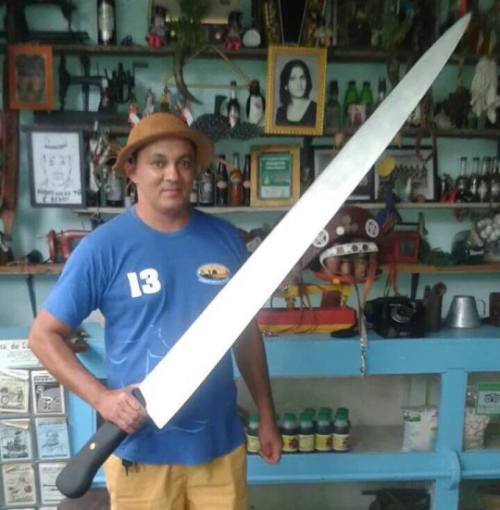
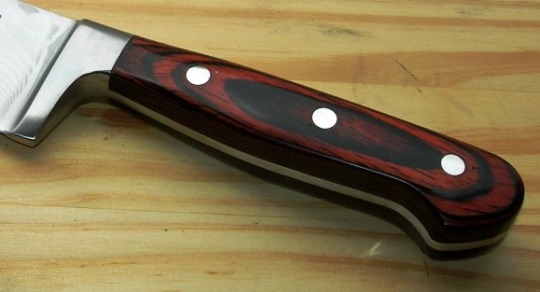
I don’t wanna like Kill The Joke but this brings up a really cool fact about swords in ~14th-16th century Germany! The only people who were allowed to own Real Swords were the royalty and nobility BUT! Everyone else was allowed to own knives. The definition of a knife, however, was based on not length but handle construction, and to some extent how it was sharpened. The handle had to be constructed Like So with 2 pieces of wood sandwiching the metal tang.
Only one edge was allowed to be sharpened, but oftentimes a small part (a couple inches) of the short edge (e.g. the edge that wasn’t sharp) would be sharpened, and weapon design often allowed for this
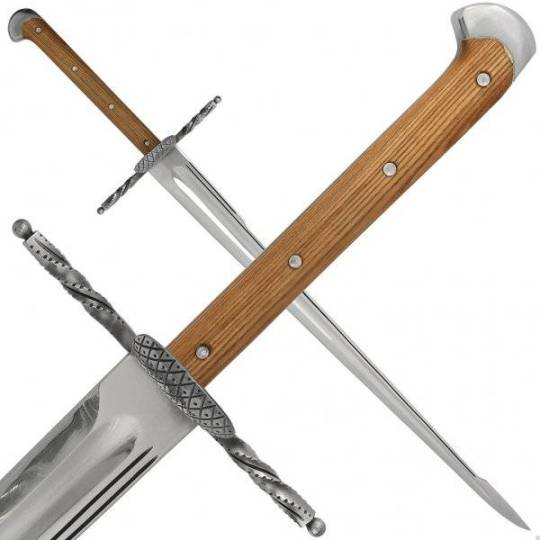
In this way, something that looked like This, a messer of just over a meter in length…
…would be legally considered a knife, and therefore allowable for non-nobility to possess. (you can also see the bit on the back of the tip that would be sharpened)
So @swordmutual, there’s a not definitive but certainly interesting historical perspective on your question
Everything about this is a masterpiece: the girl that says “wow” and the girl that says “hi” shyly and bill awkwardly lifting his hand to say hi to them I’m cracking THE FUCK UP


 Loki is the Philosopher King