I was just informed by my brother (who thinks he’s a better writer than anyone else because he has some fancy degree in writing) that fanfiction “doesn’t count” as “real writing” because you aren’t using your own “ideas.”
He doesn’t know that I write fanfiction. He probably wouldn’t have admitted his opinion if her did. But it has pretty much solidified that I will never tell anyone I know in person what I write.
I’ve already been told by several family members that my obsession with a “stupid tv show” is ridiculous and that I’m “too old” to fangirl.
Sigh. /rant
In Defense of
Fanfiction
I am a professional writer and editor in real life. I have a
double degree in English and writing and am currently in school once more to
obtain a master’s degree. If your brother’s fancy writing degree was worth anything
at all, he should be able to admit that the vast majority of all literature is
in fact fanfiction of someone else’s story and its elements. In other words, no
one’s idea is, by definition, original.
Let’s take a look at just
a few examples to support my theory that some of the most important or
well-known pieces of literature ever created qualify as fanfiction:
Ancient/Old Literature
· Around
2000 BCE:The Epic of Gilgamesh
was inspired as a fanfiction of a historical King of Uruk, mixed with
Mesopotamian mythology. The story includes the character Utnapishtim, who lives
through a world-wide flood by building a ship per the instructions of the god
Enki and ultimately landing on a mountain in the Middle East, similar to Noah’s
story from the Bible (dates for the book of Genesis vary anywhere from 1400 BCE
to 800 BCE). Many historians suggest that the story of Noah was directly
inspired by Gilgamesh’s story of
Utnapishtim. Other historians suggest the two were simply inspired by a similar
source. Either way, there’s too many startling overlaps to classify Utnapishtim
and Noah as only a coincidence.
· 20-ish
BCE: The Roman author Virgil wrote The
Aeneid, which is a direct sequel to the previously created epic The Iliad attributed to Greek bard Homer.
Virgil was also known for writing pastoral poems based off and inspired by the
work of the great poet Theocritus (280 BCE). As a fun addition, Theocritus
himself was known for rewriting the cyclops villain (Polyphemus) of Homer’s Odyssey into a love-sick idiot in his
work, Idyll XI.
Medieval Era (500-1500-ish CE)
· 700-1000:
The Alphabet of ben Sirach was an
anonymous Hebrew collection of satires that included a parody of the biblical
Genesis story of Adam and Eve. The story gave Adam a totally different wife by
the name of Lilith, the character of which was inspired by Babylonian
mythology. The whole of the collection is additionally wrapped in a fictional
account of telling the stories to the historical figure of the Babylonian king
Nebuchadnezzar—another real person fanfiction of a celebrity from that time.
· Around
1000: The world’s first novel, The
Tale of Genji by Lady Murasaki Shikibu, inspired the massive outpouring of Japanese
Noh theater plays involving characters from the novel, such as Aoi no Ue (Lady Aoi), which has been
attributed to a few people (Zeami Motokiyo and Inuo). This play appropriates
the Lady Aoi from Shikibu’s psychological novel to explore her death and is
only one example of the available fanfictions of the novel.
· 1308-1320:
Dante’s Divine Comedy (known most
famously for the Inferno) is a
literal OC self-insertion of the Italian Dante Alighieri himself into the hell,
purgatory and heaven from Catholic / biblical texts. Its format is in an epic,
in an attempt to outdo the Aeneid and Iliad before it. It also includes an insertion
of a ghostly Virgil, who copied the Iliad to write the Aeneid. Furthermore,
Dante’s work includes insertions of real historical people that Dante didn’t
like. It’s possibly the most self-indulgent fanfiction ever created while also
being named one of the greatest poems in literature.
· 1392:
Geoffrey Chaucer (known as the father of English literature) wrote a famous
collection called The Canterbury Tales.
The collection takes its basic format and inspiration from Italian author
Giovanni Boccaccio’s The Decameron (written
in 1351). It’s suggested that some of the tales Chaucer uses actually
originated from Boccaccio’s work.
Renaissance Era (1550-1660-ish CE)
· 1590:
English poet Edmund Spenser borrowed the legend of Arthur of the Round Table in
his epic poem, The Faerie Queene. In
it, Arthur is pretty love-sick over the fairy queen.
· 1597:
English playwright Shakespeare borrowed various mythologies and historical
figures and mixed them together. Not even his most popular play, Romeo and Juliet, was original. He took
the idea from a poem written by Arthur Brooke in 1562, called, “The Tragicall
Hystorye of Romeus and Iuliet.” Even more interesting, Brooke had taken his
idea from the 1554 Giulietta e Romeo
by Italian author Matteo Bandello. (Shakespeare repeatedly sourced other
people’s ideas or historical existence for his plays.)
Enlightenment Era (1660-1789)
· 1667:
English poet John Milton wrote Paradise
Lost, a fanfiction epic of the biblical story in the book of Genesis about
the fall of creation and humankind into imperfection.
· 1712:
English poet Alexander Pope wrote a mock-heroic epic called the Rape of the Lock to make fun of all the
serious epic writers before him, borrowing such images as the way epic warriors
put on armor and connecting it to the way rich people put on rich clothing and
jewelry. He used other standard epic elements as repeated throughout The Iliad, Aeneid, and so forth.
· 1759:
French writer and inventor, Voltaire, wrote a satire Candide. It borrowed various elements from Tales from a Thousand and One Arabian Nights, a collection of
Middle Eastern folktales from the Islamic Golden Age.
Romantic Era (1789-1850)
· 1819:
In Don Juan, English poet Lord Byron
took the pre-dated legend of Don Juan, which was about a man who seduced a lot
of women, and reversed the original plot so that Don Juan ended up seduced by a
lot of women.
· 1820:
English poet John Keats wrote a poem as a retelling of the Greek mythological
creature called Lamia, which was a half-woman and half-monster (description
varies depending on the Greek source). A lot of his works borrowed heavily from
Greek mythology and literature, and he idolized the English Renaissance poet
Edmund Spenser, to a point where his first work was called, “Imitation of
Spenser” (1814). In it, he borrowed various images from Spenser’s epic, The Faerie Queene.
· 1843:
English writer Charles Dickens wrote A
Christmas Carol, based off the various stories compiled in the 1841 and
1842 TheLowell Offering, a publication magazine written by a group of
intellectual but mostly anonymous women. He borrowed the certain pieces of plot,
language, and descriptions for Scrooge’s ghostly encounters from the stories “A
Visit from Hope” (anonymous), “Happiness” (anonymous), and “Memory and Hope”
(by someone named Ellen). A Christmas
Carol is additionally littered with biblical allusions all over the place.
· 1844:
French writer Alexander Dumas borrowed The
Three Musketeers, as well as many of the story’s side-characters, from The Memoirs of Monsieur d’Artagnan by
French author Gatien de Courtilz de Sandras. He didn’t even change the names or
who the villain, the Cardinal, was.
· 1845:
American author Edgar Allan Poe wrote The
Thousand and Second Tale of Scheherazade, in which he has the mythical Scheherazade
from the Tales from a Thousand and One
Arabian Nights telling another story about the legendary Sinbad the
Sailor.
· 1861:
Hungarian author Imre Madach wrote The
Tragedy of Man, which reverses the biblical moral principles of God and
Satan: In this story, God is the violent and evil ruler, and Satan is the jaded/trickster
victim just trying to open humanity’s eyes to the truth.
Modern Era (1900ish-1950s)
· 1922:
Irish novelist James Joyce wrote his stream-of-consciousness novel Ulysses, which was based off of Homer’s Odyssey, to a point where he took the
characters and simply renamed them, as well as aligned the structure of his
book to the various episodes in Homer’s work.
· 1930:
The Nancy Drew series was created under
the penname Carolyn Keene, who did not exist. Instead, an American man named
Edward Stratemeyer would write three pages of a story, then send it to one of
several ghostwriters who wanted to write Nancy Drew. The ghostwriter would take
the story and expand it. The anonymous group of ghostwriters all writing about
the same character still exists today. Each individual ghostwriter has made
changes to Nancy’s personality, looks, and age, as well as the type of plots said
character engages in.
· 1937:
English writer JRR Tolkien wrote The Hobbit
and then Lord of the Rings in the
1950s. He borrowed the names of characters and places after those seen in the
Icelandic sagas Poetic Edda and Prose Edda by Snorri Sturluson. Tolkien admitted
he based the physical appearance of Gandalf off of the Norse god Odin. He
modeled the character of Aragorn directly after Beowulf, from the old English epic
(700-1000 BCE) Beowulf. Aragorn himself
even paraphrases the Anglo-Saxon poem, “The Wanderer,” as an example of a verse
created by his people of Rohan. Another fun fact is that Tolkien specifically
borrowed the phrase “my precious,” from a Middle English poem called Pearl. Additionally,
Tolkien was a big fan of romantic prose/poetry writer William Morris and wanted
to write like him, so he borrowed a lot of phrases, aesthetics, and even names
from such works like the 1888 The House
of the Wolfings by Morris, including the place called “Mirkwood.” Of
curious note is that Morris’s work was massively influenced by Virgil’s Aeneid.
· 1938:
African-American author Richard Wright wrote a collection of stories called Uncle Tom’s Children, with an obvious
borrowing of the title from Uncle Tom’s
Cabin, written by Harriet Beecher Stowe in 1852.
· 1930s-present:
DC and Marvel comics mostly just updated the mythological gods and goddesses
for a modern era, appropriating their names, special relics, and abilities for
their heroes, and then mixing them with some modern-day cover identifies. As an
example, Wonder Woman was originally a nod to the Greek goddess Diana, a nod to
the female Amazon warriors, and a redesigned image of Rosie the Riveter. As
another example, the Flash is a reproduction of the Greek god Hermes, his
winged helmet further clarifying the connection. Even the name Superman was not
entirely original. 1938 Illustrator of Superman, Joe Shuster, took the name
“Superman” from the German “Ubermensh,” a term coined by the philosopher
Friedrich Nietzsche. As a final example, sometimes the appropriation from
mythology is incredibly obvious, as in the case of Thor.
· 1949:
English author George Orwell reviewed a book called We by Russian author Yevgeny Zamyatin. He wrote a rave review on it
and declared that he would try to write something similar, which ultimately
became 1984, sharing many similar
plot points and concepts while bringing the story of We into a more realistic environment. The novel We also inspired Ayn Rand’s Anthem and Kurt Vonnegut’s Player Piano, for which Vonnegut
admitted he also borrowed concepts from Aldous Huxley’s Brave New World.
· 1950s: The Chronicles of Narnia by British author
C.S. Lewis was based on biblical stories conveyed through various mythological
elements as well.
Postmodern Era (1950s-Present, debatably)
· 1977: African-American
author, Toni Morrison, wrote a critically acclaimed novel called Song of Solomon, which took its title
name, as well as the names of several characters and plot points, from the
Bible.
· 1988:
British-Indian author Salman Rushdie’s The
Satanic Verses was inspired by the life of the Islamic prophet Muhammed.
Its title is a direct reference to controversial verses once placed in the
Quran but then removed. These highly controversial and sensitive connections to
Islamic and Old Testament personalities of Gabriel and Satan resulted in the
banning of Rushdie’s book from several regions.
· 1997-2007:
The Harry Potter series by British author
JK Rowling borrows heavily from historical alchemy, including the age-old
legend of the philosopher’s stone and the 1652 book Culpeper’s Complete Herbal, which was about the medicinal and
occult properties of plants, which helped her build how magic was used in her
stories. Rowling also admits the 1652 book inspired many of the character’s
names. She appropriates several historical figures as well for her own purposes
(as a sort
of real-person fanfiction), including references to alchemists Nicolas Flammel and
Paracelsus. She even admits to, while writing Harry Potter and the Sorcerer’s Stone,
dreaming about Flammel showing her how to make a philosopher’s stone.
· 2003:
American author Dan Brown’s The Da Vinci
Code and its twisting conspiracies are based almost entirely on the books
of Margaret Starbird, most of which were written between 1993 and 2003.
· 2009:Pride and Prejudice and Zombies, by American
author Seth Grahame-Smith, is a rehashing of Jane Austen’s 1813 Pride and Prejudice. But with zombies.
· 2015: American
writer of critically acclaimed The Outsiders,
S.E. Hinton, claims that she has posted anonymous fanfictions of her own novel,
as well as at least four Supernatural fanfics, being a huge fan of the show and
of the paranormal.
As a professionally educated and trained writer and editor
myself, I had to study the intertextualities of several of the pieces I
mentioned above. But this is not an exhaustive world list by any means and is missing some other fantastic and influential writers—I’ve included only
what has come to my mind in a short time. Plots and characters and ideas have
been largely passed around throughout the history of literature. Without
fanfiction, a solid portion of well-known literature would not exist.
In fact, many authors and even inventors will say that there
is no such thing as an original idea. Certain pieces get touted as creative
because they combine previously suggested elements in a different or
thought-provoking way. (Don’t even get me started on how science fiction is a
driving force behind many scientific advancements today!)
If you’re writing fanfiction, then you’re participating in a
tradition that spans millennia. There is no piece of literature created in some
“original” vacuum. That is precisely why literary critics, and those who have professionally
studied fiction in an academic setting, use the word “intertextuality” to
describe how works of fiction are ultimately interrelated in some way or
another.
Therefore, fanfiction is the legacy of literature. If
Virgil, Dante, Shakespeare, Voltaire, Keats, Poe, Dickens, Tolkien, and Brown can
write fanfiction about and expand other people’s works, you can too. So the
next time someone tells you to stop writing fanfiction, or tells you that it’s
not a valid form of art, tell them that they obviously have never read the most
important historical works of fiction, or even many popular modern stories,
which are all rehashed fanfiction stories, borrowing characters and names and setting and even syntax.
Rant written for @greenappleeyes and everyone else unfairly shamed for writing fanfiction. Content was retrieved from my own class notes, as well as publically available online interviews and articles.
@indigopersei is the french language just always on the verge of getting someone accused of assault or..?
my friend, if only you knew
It’s a very dangerous language to learn
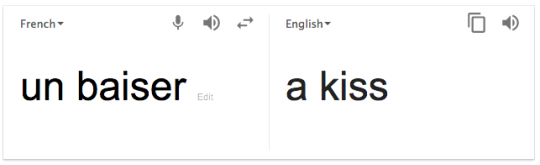
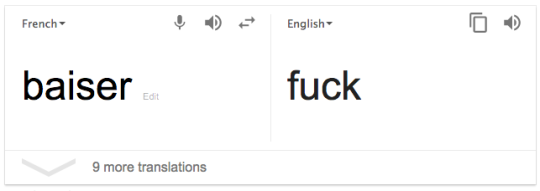
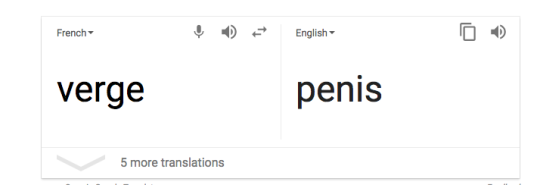
Here’s an interesting thing about French! Everything needs to have an article in front of it. That’s why it’s “la chat” as opposed to just “chat”. So, for instance, you could say la fille for the girl, or jeune fille for young girl, but you can’t just say fille, because that means you are calling her a sex worker in a derogatory way.
The moral of the story is, if you want to make something rude in French, just take out the article in front of it. Yes, this works for nearly. every. word.
Every year. Every year there’s that kid who forgets that you can’t translate “I am excited” to “Je suis excitée”. And every year Monsieur Jordan has to slam the brakes before that kid can finish his sentence and then tactfully ask him not to announce to the class that he is horny.
“is the french language always on the verge” oh buddy, oh pal, i am so happy to break this news to you:
The way they did Loki as Odin in Ragnarok dissatisfied me (big shocker, I’m sure). It’s not that I don’t believe Loki would write a play about himself, or invest in the arts, or sit around in a bathrobe eating grapes. I just don’t think he’d do it because he’s a hedonistic narcissist. Trump’s a narcissist. He’s got a high opinion about himself, loves when his ego is stroked, and throws a fit when it isn’t. Loki thinks that he’s a monster, expects everyone to agree, and grows bitter and spiteful because of it. That’s not the same thing. Think of Blood Brothers. Loki says that Thor was the only one who ever loved him, and he’s killing him because he stopped. He doesn’t attack those that never loved him. Now, Loki is a bit of a hedonist. He’s absolutely easily bored (intelligent people are often bored by mundane routine). I’ve no doubt he’d hate almost everything about ruling. I just don’t think that would make him a shit ruler. So, I’ve written a few headcanons about Loki’s time ruling Asgard. I think they’re a nice balance of intelligence, laziness, self-care, and planning for the future. Feel free to disagree or add your own.
Loki dismisses his father’s council (made up of wealthy lords and ladies with little practical knowledge), and forms a new council with younger members, some of them nobility, but many of them common. Their unifying trait is that they are all super competent in the area they’re overseeing. He delegates his kingly duties (the daily grind) to many of them. Loki finds the day to day requirements of being a king tedious, but he’s got a vested interest in everything running smoothly, and he’s not an idiot. To explain why he delegates more duties, he claims his years are catching up with him, and that Frigga’s death drained him. People respect that.
Loki spends time researching the Infinity Stones. He does so covertly, so as not to attract the attention of Thanos or any of his people. He specifically studies the Tesseract in secret.
Loki doesn’t bother to send armies to the other Realms. One, their in chaos because puppet governments are falling apart. Loki’s not one for order, particularly not Odin’s order, so he lets the revolutions run their course. Two, he wants to bolster their army for Thanos’ inevitable appearance.
To that end, he allows rapid advancement among the ranks based on skill (he does away with any nepotism that occurs). It’s not out of a sense of justice. It’s about practicality. Everyone’s got a shot based on their merit. Considering the natural strength of the Asgardian forces compared to other alien races, nepotism likely ran wild. Odin meant to appease the nobles. I imagine Hogun, a Vanir, only got as far as he did because he had Thor’s support. (He does deserves it. I’m not saying he doesn’t. I’m saying the opposite. Like Sif, he had to fight tooth and nail to get respect in Asgard.)
Loki increases the demand for practitioners of seiðr. He diverts resources to training interested Asgardians.
If Loki had anything to do with the other Realms, he traded with them (both the puppet governments and the rebels). In effect, he prolonged the instability in other Realms in order to increase Asgard’s treasury.
The theater, complete with statue in front, isn’t dedicated to himself, but Frigga. The statue is of her.
He does write plays. However, Loki’s elequent, artistic, and he’s read countless books and plays. He isn’t a bad writer. The play is well written. It is also well acted, since Loki would not be satisfied with such shitty acting. Essentially, watching Loki’s play is every bit as emotional and dramatic as watching the scene in TDW, if not more so. That’s one of the best, most emotional scenes in that movie (and Hemsworth’s best performance in the MCU), and mocking it pisses me off.
He takes a lot of baths with bubbles and scented oils. It’s very relaxing.
The paperwork he can’t avoid he does in Frigga’s gardens. He hires the best people to tend to the gardens. Not only does sitting in the gardens make him long for Frigga, it also makes him miss Thor. Being all about the fertile earth, Frigga encouraged him to walk through the gardens and reinvigorate her plants. The gardeners just can’t achieve that loveliness. (This one’s very inspired by one of @raven-brings-light‘s headcanons about Thor.)
And now, for my wildest headcanons. My Frost Giant stan headcanons:
Odin never told Jotunheim who attacked them using the Bifrost, either because he didn’t see a reason to or because Loki did it. If they discovered one of Odin’s sons did, they’d demand the crown pay.
Loki uses that fact to his advantage. He’s aware the Frost Giants are a match for the strength of Asgard (they’re a legitimate threat in a fair fight). He goes to their king, one of his brothers, and reveals who he is. In small ways, he helps them rebuild, and earns their trust. He never exposes that he’s currently ruling Asgard, and therefore could give them the Casket at any point. He does all this to facilitate his escape plan should Thor return. He doesn’t want to live in a ruined Realm (hence why he’s fixing it up a bit), but Jotunheim’s a good place to hide from the people who want to see him dead/tortured/imprisoned. If he escapes there, Thor won’t follow. He’d risk war. Loki would grab the Casket on the way out to make extra sure Thor wouldn’t risk it. Thanos’ minions won’t get far facing an army of Frost Giants with ice powers. It’s the safest place for him to hide after Asgard.
I also love this headcanon because imagine how pissed Thor would be to discover that Loki told his Frost Giant brothers he was alive, but didn’t tell Thor. The amount of trouble Loki would be in for that….
If he’d had to enact this plan, Loki would have grown depressed, and he would often sneak back into Asgard disguised as another Asgardian or an animal.
Thank you for tagging @foundlingmother ! Great headcanons! I love all of it! Certainly better and makes more sense than what they did in the movie. I totally agree with your headcanons except the one about Frost Giants. As much as I love it and I like to read it in a fic, I think it’s a bit of a strech. I don’t think he’s ready for sth like that or even entertain the idea of contacting Frost Giants. Because I remember his face when he said he is from Jutonheim in TDW. Imo he still doesn’t believe that he belongs anywhere. Not Jutonheim, Not even Asgard. That stupid play kind of hinted it. Blue baby, not Juton baby. Asgard’s savior, not Asgardian. I believe when Thor said “Asgard is not a place, it’s a people” was the moment Loki realized that he belonged in Asgard. I think he just needed to hear it from Thor.
Yes, I agree. They’re very much a stretch. That’s why I set them apart. The other headcanons feel 100% possible, while that one’s more a product of my wishing the Frost Giants could get some love.
I also have a headcanon for how he and Thor approach them post-IW (because everyone lives go away Marvel you’re not welcome anymore). Jotunheim possesses vast untapped resources that could help the Asgardians (and Midgardians) rebuild. Nidavellir does, too, but they’re dealing with a civil war, and the Asgardians have nothing to trade with them. They do, however, have something to trade with/give the Frost Giants. (Not that I think this would be easy–they’d be bargaining with a stolen object, and that would exacerbate the legit animosity that the Frost Giants feel towards the Asgardians.)
This headcanon requires that I also headcanon Loki grabbed the Casket, which I do. I headcanon he grabbed any of the artifacts he could. Seems a waste not to. They’re right there and could be useful.
“You will tell me why,” Thor snarls down at him, fingers flexing on his axe-shaft, looming over Loki’s kneeling form like the old gods he clings to, gory and huge and terrible.
“I am a King,” he replies, baring his blood-stained teeth in a feral grin. “Kings do not share.”
Our Kingdom Comebyamberfox17 , another collaboration between us inspired by the last episode of Vikings, “Eye for an Eye”.
OH GOD THOSE POOR BABIES i am sobbing i am laughing so hard
In the last pic the cat is all “oh thank god I found ground NO WAIT COME BACK GROUND”
THOSE POOR BABIES OMG WHY AM I LAUGHING AT THIS
Astronaut: We need to fund 1.4 billion dollars. NASA: FOR WHAT?! Astronaut: We want to put kitties in space and have them float around in zero gravity. NASA: Here is all the money. God bless.
Those cats are just ?????????????!!!!!!!!!!!!!!!!????!?!?!?!?!?!?!!!
The most confused cats in the history of everything.


 Loki is the Philosopher King