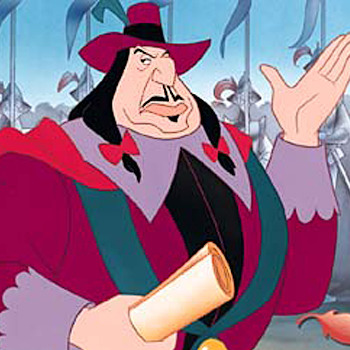
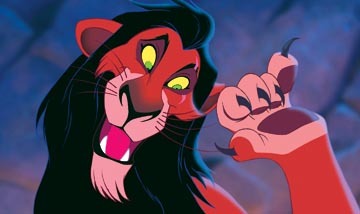
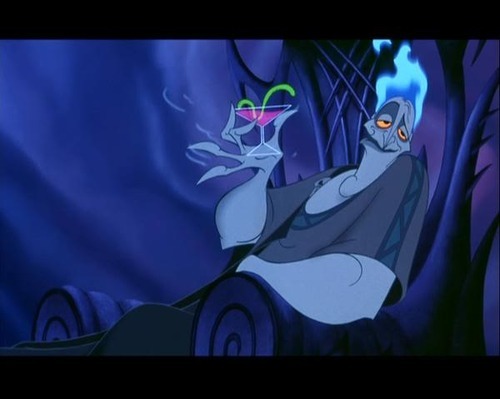
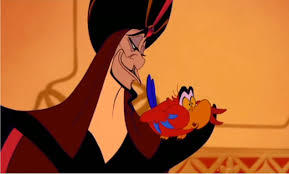
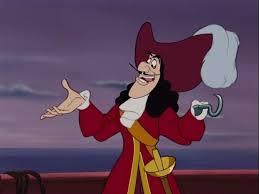
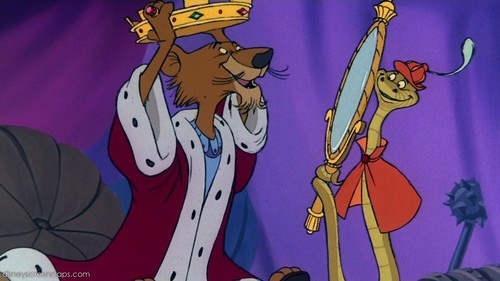
Many male Disney villains are what we would call “camp.” Effeminate, vain, “wimpy” and portrayed as laughable and unlikable. Calling upon common negative stereotypes about gay men, these villains are characterized as villainous by embodying these tropes and traits.
Think about it: Often Thin/un-muscled figure, heavily inked and shadowed eyes (giving the impression of eyeliner and eye shadow?), stereotypically “sassy” and/or manipulative, often ends up being cowardly once on the defensive, many have comedic male sidekicks (such as Wiggins, Smee, Iago, the…snake that isn’t Kaa)
Other examples:
since i was talking about one of the disney man villains who doesn’t fit this stereotype yesterday…
Gaston.
my bf was listening to that song about him yesterday
and i mentioned that he is literally the most terrifying disney villain
why?
because his type of evil is banal and commonplace
there are white men walking around who are exactly like him
men who think that women are prizes they deserve
men who will not listen or pay attention to a rejection
men who will go out of their way, if rejected, to ruin a woman’s life
ppl often seem to miss this when discussion beauty and the beast since the stockholm syndrom ‘romance’ is also a giant icky thing
the terrifying thing about gaston is that he is supposed to be (as all disney villains) a hyperbolic cartoon
but he is the absolutely truest and most real villain
because he exists in the real world
we all know men like him
Also, if we’re talking about queer coded characters the MOST important of all the characters is Ursula who was bad off of a drag Queen (Divine) and has a whole host of negative stereotypes.
She’s also my favorite.
This post is sorely missing some seriously important historical context. The term for this as film history goes is the sissy, and as a stock character the sissy is probably one of the oldest archetypes in Hollywood, going back to the silent film era. Some of the most enduring stereotypes of male queerness—the limp wrist, swishing, etc—can actually be traced to the exaggerated movements of cinematic sissies in silent films. And it’s important to note sissies were portrayed in a range of ways, though they were generally used to comedic effect; queerness was considered a joke, and the modern notion of the “sassy gay friend” in films can probably be traced back to this bullshit too. It wasn’t until the Hays Code was adopted in the ’30s that sissies almost uniformly started being portrayed as villains. Homosexuality was specifically targeted under the euphemism of “sexual perversion”, and the only way it could fly under the radar in films under the strict censorship of the code was by coding villains that way in contrast to the morally upright hetero heroes. Peter Lorre’s character in The Maltese Falcon is one off the top of my head, but there are a slew of them from the ’30s onward, and this trope didn’t go away after the Code ended either. More modern examples in live action films are Prince Edward in Braveheart, Buffalo Bill in Silence of the Lambs, and Xerxes in 300.
So Disney just provides some of the most egregious modern examples of the sissy villain, but this is a really old and really gross trope that goes back years and years in Western film. There’s a fantastic book and accompanying documentary about the history of homosexuality in film by Vito Russo called The Celluloid Closet that gets into a lot of this.
It’s incredibly refreshing to see a response to a post like this that starts with “This post is sorely missing some seriously important historical context.” and then goes on to provide important historical context that adds information to the point being made. I was seriously wincing and bracing myself for “You guys, you don’t understand. It was different back then.”
(Of course, I wouldn’t have been worried if the name of the last poster hadn’t scrolled off the top of my screen by the time I got to it.)
There are some things that bother me about the first image being regarded as queer coded: 1) pink was considered masculine up until the early 1900’s (roughly pre- ww1), and was continued to be worn by guys thru the 1980’s.
As for the hair bow aspect, those were period correct as well.
Google, my friends. I agree with the rest of them, but…that first? He’s not queer coded. He’s just upper society jerk
Do you really think Pocahontas is a period accurate movie in any aspect?
The story we know of Pocahontas–or at least the one portrayed by the Disney film–is one told by John Smith himself. So, the reliability of a story that involves a woman being head over heels in love with the person telling you the story is questionable at the least.
Jumping in to add to the laundry list another (technically) Disney stereotypical queer-coded villain:
Though the GM’s queerness was not really coded, I still think it’s important to point out the enactment of the exact same features of the above-mentioned villains. It’s still frankly shocking to me that tumblr hasn’t dragged this movie for its regressive stereotypes. It was a huge step back for Disney/Marvel’s potential for respectful LGBTQ+ representation.
I jumped ship from Tumblr and this is where I landed. I'm a philosophy postdoc (INTJ, she/her) with a serious thing for Tom Hiddleston as Loki. Sometimes I even write fanfiction about it. Mostly Loki and Thor/Loki (sometimes NSFW), some miscellaneous Hiddles, MCU (Steve/Tony or "Superhusbands" is my secondary ship), occasional Cherik, Game of Thrones, LOTR, Whedonverse... whatever catches my fancy, really.
View all posts by philosopherking1887


 Loki is the Philosopher King